
The code shows up faster. The mess around it doesn’t. Once a coding agent is useful, incidents, open vulnerabilities, and the token bill still land on the same platform team. Autoheal put a round behind that observation yesterday. In a company post dated September 28, 2026, and bylined to co-founders Sid Choudhury, Utkarsh Ohm, and Puneet Saraswat, they write: “AI coding agents accelerated feature delivery, shifting the bottleneck to keeping software reliable, secure, cost-efficient, and supportable after the commit.”
The announcement, on Autoheal’s own blog, is a closed seed, not a rumor: “Today, we are announcing our $7.9M seed round, led by Harpinder Singh at Innovation Endeavors, with participation from Emergent Ventures, U&I Ventures, Darkmode Ventures, Batch Ventures (CTO Fund) and Param Hansa Values.” Angels named in the same paragraph are Shawn Kung, Founder of GIT100; Sumeet Arora, Chief Product Officer of Teradata; Anshu Sharma, Co-Founder & CEO of Skyflow; Savin Goyal, Co-Founder & CTO of Outerbounds; and Srikant Gokulnatha, former SVP at ThoughtSpot. They also say, “Our team previously built and scaled the DevOps platform at Harness.” SiliconANGLE’s same-day report matches the amount, the lead, and the participant list.
What they mean by a software factory
Autoheal’s definition is specific: “A software factory turns ad-hoc agent workflows into a shared cloud-based system that runs in the background autonomously instead of on individual laptops.” The product they describe is “a self-improving software factory for removing that bottleneck: one platform where enterprise engineering teams build, run, govern and continuously improve worker agents for incident response, vulnerability remediation and AI coding cost efficiency.”
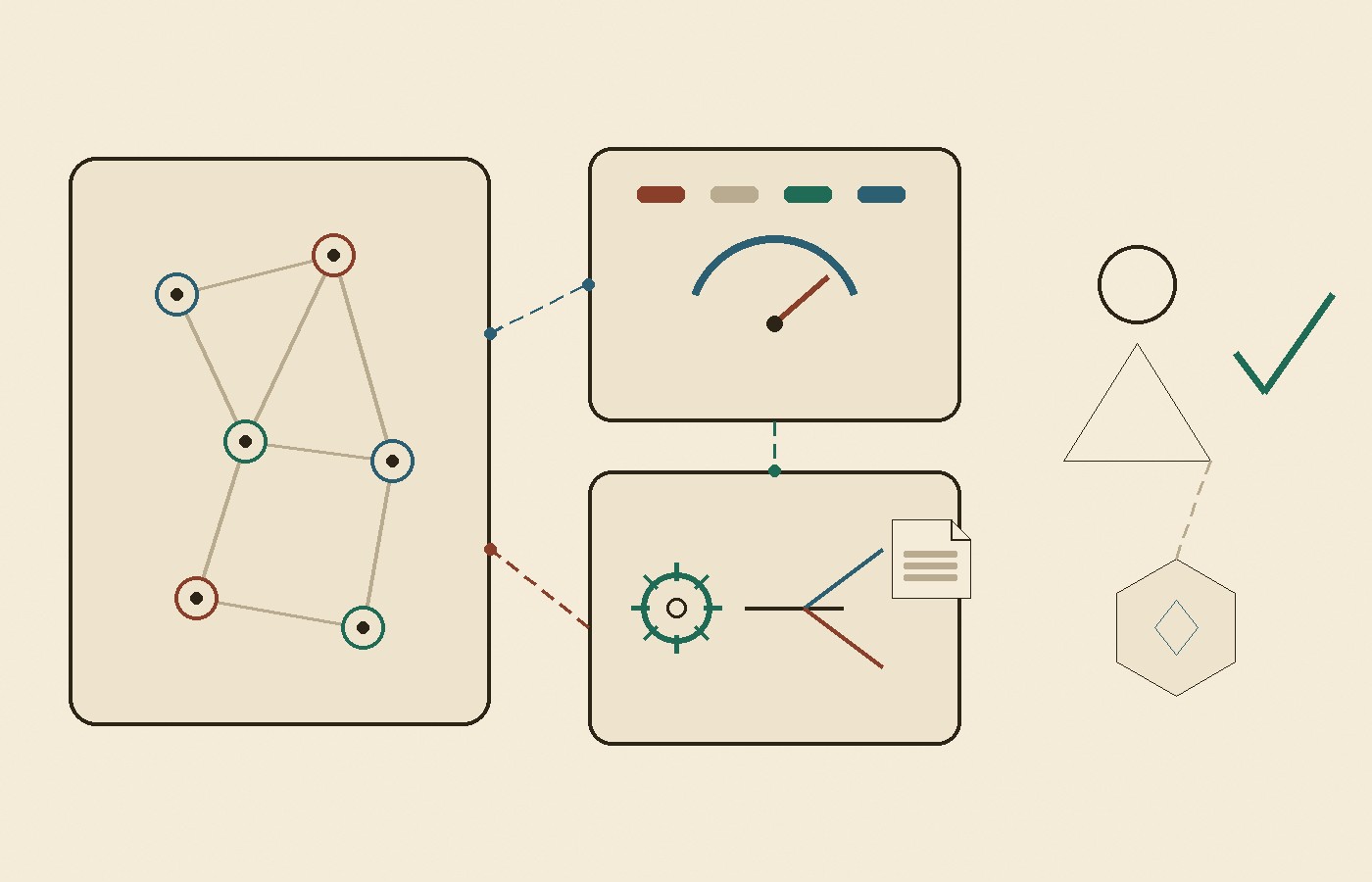
They split it into two planes. The context plane is “what every agent reads before it acts, and what Autoheal improves.” Under that, “A context graph links your repositories, services, tickets and releases.” It also holds a registry of skills, AGENTS.md files, and memories. The control plane is “how every agent runs”: definitions as code, budgets, model selection, identity, roles, and approval policy, with a tool gateway that registers each integration once. The line I want to keep is this one: “Autoheal doesn’t manage or replace the coding agents your developers already use. What it changes is the context they read, so an improvement made for one agent reaches every agent, coding agents included.”
An evaluator, a healer, and a pull request
Deploying a worker isn’t the loop. Two more agents maintain it. “The Evaluator scores every run” against what happened downstream: “review comments, CI re-runs, fired alerts, the incident’s actual root cause.” Scoring stays “on your own data inside your own security boundary.” Then “The Healer fixes what the Evaluator finds.” It “turns weak scores into specific context changes, such as an updated skill, a correction to an AGENTS.md file, a new memory, a narrower tool scope or a different model, and opens a pull request for each.” Changes are “back-tested against your run history and promoted only if it clears a blast-radius threshold.” And the gate is ordinary engineering practice: “Every change is version-controlled in git and needs an engineer’s approval to go live. You review it like any other pull request.”
For where it runs, they offer to “Deploy in your own cloud (BYOC) or fully airgapped, with data sovereignty controls.” They also say “Read-only access by default” They also say the first agent “runs in minutes and can be rolled out to a team in hours.” Broader rollout following the customer’s own access rules. I wouldn’t treat “minutes” as a promise for a bank. It’s their onboarding claim.
What Nomura and AvidXchange said
The post names two customers and quotes them. These are Autoheal’s published words, not an interview I did. Sameer Jain, CIO, Wholesale at Nomura Bank:
Our production operations teams spend valuable time triaging alerts and managing incidents, while also pulling engineers away from their software development activities. Autoheal gives us a platform that takes investigation timelines down from hours to minutes. The fact that it runs entirely within our own cloud, in compliance with our controls, made it a natural fit for how we operate.
Krish Shetty, CTO and SVP at AvidXchange:
In production incident response, Autoheal took our time to root cause to minutes, with evidence our engineers trust. That’s time our developers stay focused on feature work. Next, we’re shifting it left into other critical parts of our SDLC, because every engineering hour we get back goes into shipping faster for our customers.
Separately, Autoheal states its own pitch numbers, which I am not treating as audited results: “up to 80% lower MTTR and 3x faster vulnerability burndown” and “up to 40% lower AI coding cost.” They say they run a “three-week proof of value in your environment”, measured against your baseline: time to a root cause supported by evidence, effort to produce a validated vulnerability fix, and cost per successful coding task. That’s the right shape of claim. The percentages are still a pitch until that proof is yours.
My takeaway
If coding agents already sit in your inner loop, the next design question isn’t which model writes the function. It’s who owns the context those agents read, and who is allowed to change it. Autoheal’s answer is a shared graph, two maintenance agents, and a pull request a person still merges. I like that the edit path is git. I don’t like reading “up to 80%” as a result. The round is announced and the customer quotes are on the record as Autoheal published them. If I were evaluating this, I’d take the three-week proof they describe and score it on my own incidents, not on the seed-round slide.