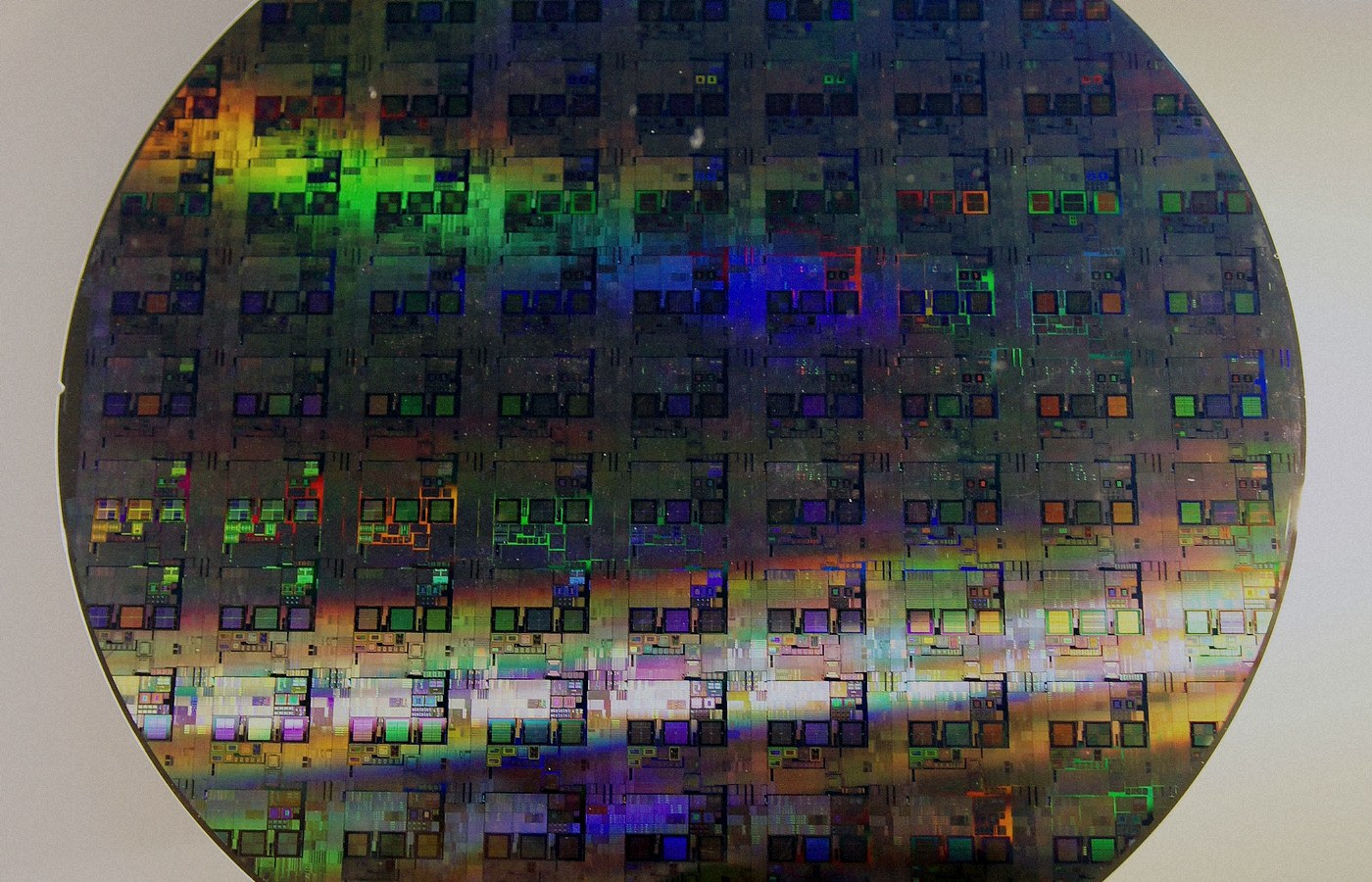
From Mexico — CNBC has an exclusive: Dutch startup Euclyd raised a Series A of about €200 million — framed as roughly $230–231 million — for an AI inference chip system that isn’t a GPU clone. Samsung co-led with Somerset Capital Partners, the Scaleup Europe Fund managed by EQT, and Innovation Industries.
I’m sticking to what CNBC lists for investors and dollars. This is an inference-chip story — processor plus memory architecture with a different design than GPUs — not a networking round. (If you’re thinking of today’s other Dutch hardware chatter, don’t flatten it into that lane.)
What Euclyd says it’s building
Founded in 2024, Euclyd is designing a full chip system for inference, CEO Bernardo Kastrup told CNBC. Two revenue paths in the piece: sell hardware and physical rack systems to enterprises that want secure self-hosted inference, and license IP to companies that want to build their own chips on that tech.
Energy and cost cuts for data-center AI infrastructure? That’s company / CEO framing in the exclusive — I’m not inventing Nvidia bake-offs or performance tables that aren’t in the reporting.
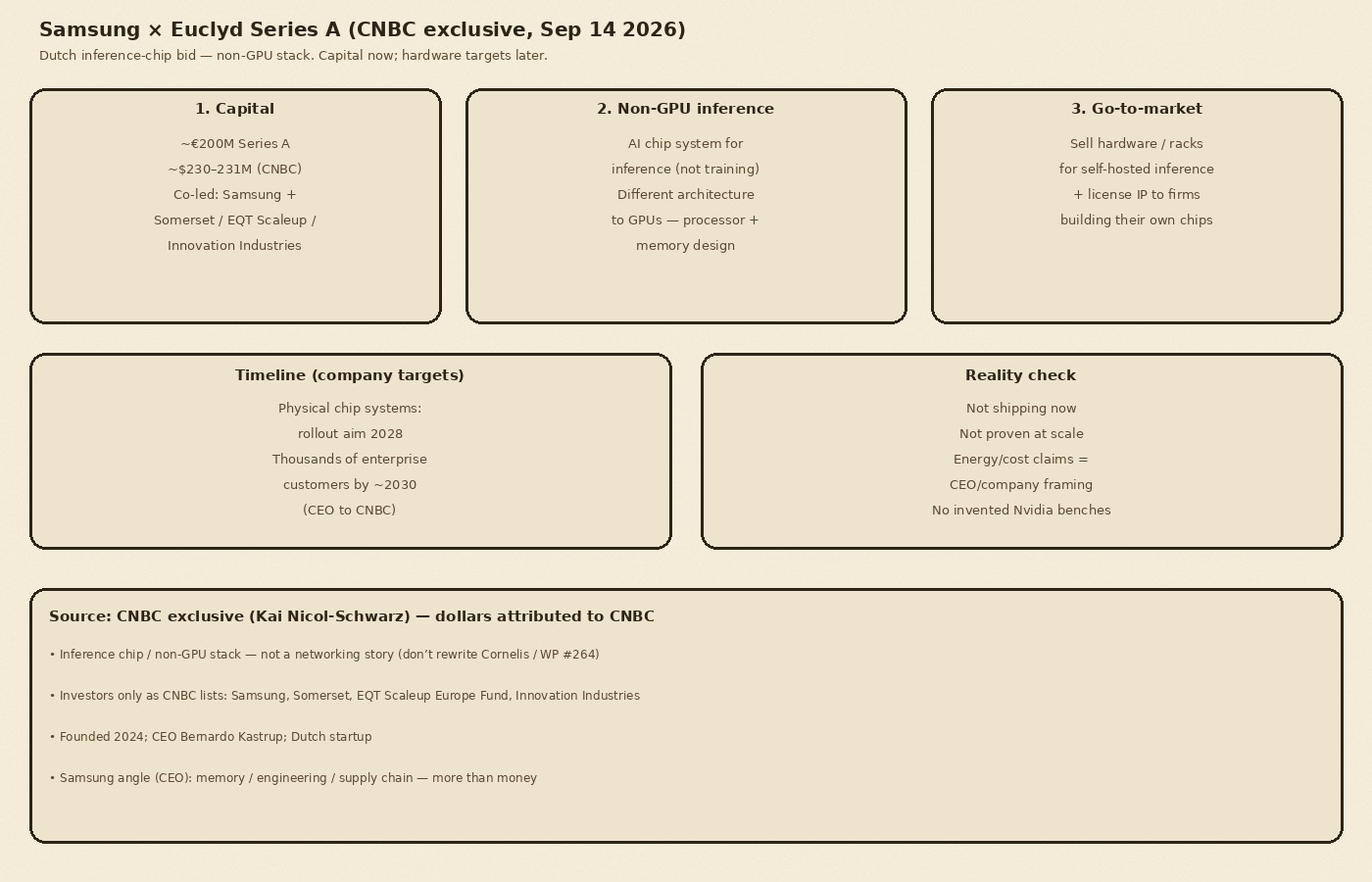
2028 hardware — targets, not a ship date today
CNBC is clear: Euclyd’s systems have yet to be proven at scale in commercial deployments. Kastrup says the company aims to begin rolling out physical chip systems in 2028, with thousands of enterprise customers by 2030. Those are targets. Not shipping now.
Why Samsung shows up
Kastrup’s line to CNBC: Samsung can help with more than money — memory manufacturing, systems engineering, supply chain, network. Useful context for a memory-and-systems heavyweight co-leading an inference silicon Series A. Still not a product roadmap for Samsung phones or GPUs.
My takeaway
From Mexico, the narrow read: CNBC says Samsung co-led Euclyd’s ~€200M / ~$230–231M Series A for a Dutch non-GPU inference chip stack, with hardware rollout aimed at 2028 and customer scale toward 2030 — capital and ambition now, proof later. Source: CNBC.