
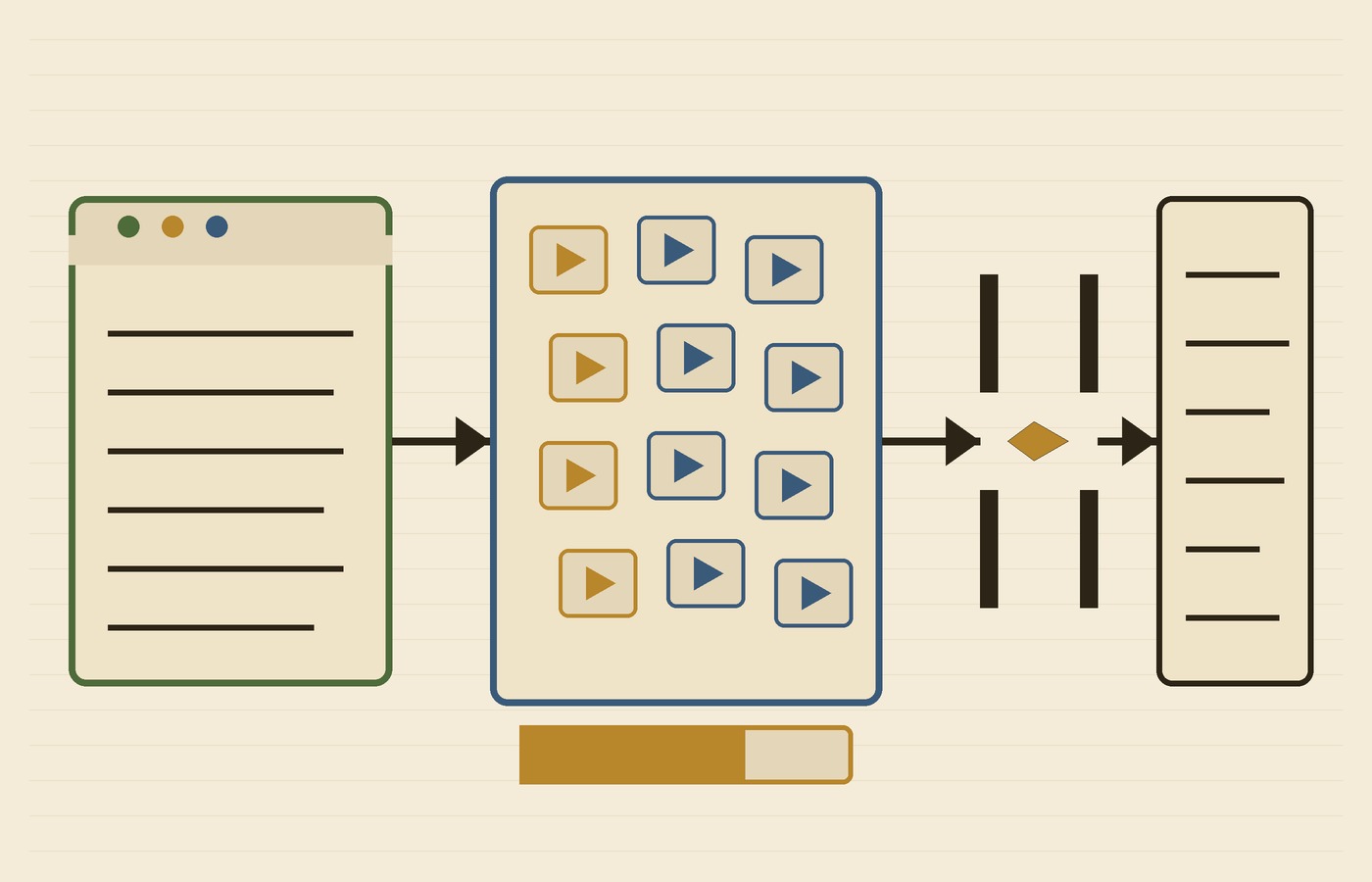
On November 17, Replit launched Missions. You define the outcome, the company says, and it coordinates a swarm of agents to plan, build, test, and iterate toward it within the budget and boundaries you set. The official post is by The Replit Team.
That’s a multi-agent project runner, not a new coding model. Replit says the work it has in mind includes improving product performance and replacing legacy software. Missions brings the same approach to your team’s goals, the post says, without requiring you to build and maintain the infrastructure needed to coordinate an agent swarm. I haven’t run Missions.
Budget, approvals, and how Replit says a mission ends
Your Missions agreement sets the spending limit and which actions require your permission, the post says, and those limits stay in place as the approach evolves. Replit’s example cap is $1,000, with approval required before an agent contacts prospects, shares a proposal, changes customer-facing sales materials, or makes product commitments.
During planning, you choose what you want to hear about — blockers, progress updates, general status — and how often: immediately, in a daily digest, or weekly. Replit says you can close your laptop and let the cloud agents work; Missions sends updates on that schedule and reaches out when it needs your input.
An independent AI judge checks results against your agreed success criteria, the company says, and agents use that feedback to refine their work. A mission is marked complete when those criteria are met. If the budget runs out first, work stops with the outcome still unresolved. You can also look at completed work, active tasks, and anything waiting on your approval. Replit’s product page for Missions is replit.com/missions.
DataCat, and the figures Replit reports
Replit’s own example is DataCat, an application monitoring platform the company says it wanted to customize and run on its own infrastructure. In two days, within a $3,000 budget, a swarm of agents built dashboards, alerts, and application tracing, then tested the platform against measurable performance and reliability goals, the post says. The mission also built DataCat’s own agent and tracing libraries.
To test whether DataCat could help diagnose a failure, Replit says it deliberately introduced a database bug. DataCat raised an alert in 38 seconds, beating a 60-second target, and traced the failure to the exact query and its logs, according to the post. Those are Replit’s tests, not mine.
Replit also reports a set of load, correctness, and comparison figures for DataCat, and it adds a caveat I think is worth keeping: “These controlled tests do not establish performance against the original platform’s hosted service or on Replit’s production systems.”
The company says it is open-sourcing a self-hostable version of DataCat. The GitHub repository is replit/datacat. I fetched it on November 18, 2026 at 8:18 a.m. America/Phoenix: 112 stars, Apache-2.0 license, default branch develop. There were no GitHub releases. The most recent push was 2026-11-17T16:41:48Z, which is 9:41 a.m. America/Phoenix on November 17.
Swarm size, on a NumPy benchmark Replit ran
Agent swarms give Missions the capacity to explore multiple solutions at once, share insights, and build on each other’s discoveries, Replit says. For performance work, agents can test different implementations in parallel, use shared findings to refine their approaches, and work together to validate correctness as they identify faster solutions, according to the post. The company ran 13 representative benchmark tasks using NumPy. With Auto (Max), it says, a single agent achieved speedups of up to 4×, a 16-agent swarm reached 17×, and a 32-agent swarm reached 19×. Auto (Power) showed 2×, 7×, and 9×, respectively. Those are Replit’s numbers, not my tests.
Replit says you start a mission by clicking New in the sidebar, selecting Mission, and describing the goal. I haven’t tried that flow. The limits and approvals in the agreement are the part I’d read first, because the agents are meant to keep working until the criteria are met or the budget runs out.
Hero photo: Banco de peces trompeta (Macroramphosus scolopax), islas Azores, Portugal, 2020-07-27, DD 38 by Diego Delso, via Wikimedia Commons; CC BY-SA 4.0; cropped and resized.