From Mexico, I’ll admit the thing that tires me most about coding agents isn’t the code. It’s babysitting them: checking which one is stuck, which one is waiting on me, and which one just posted something noisy in a shared channel. DeepSeek’s agent tools team is going after exactly that. On October 31 it put dsh-superagent on GitHub under the MIT license, a proactive coding agent for one GitHub repository, packaged as a bundle for DeepSeek Harness.
First, the label on the box. The README calls it a research prototype for reference only, “not an official DeepSeek product.” It says the code grew out of the team’s daily work, much of it written by coding agents, that it may still have bugs, and that the public version isn’t identical to DeepSeek’s internal one. Some ideas from the team’s design article aren’t built yet.
How it works
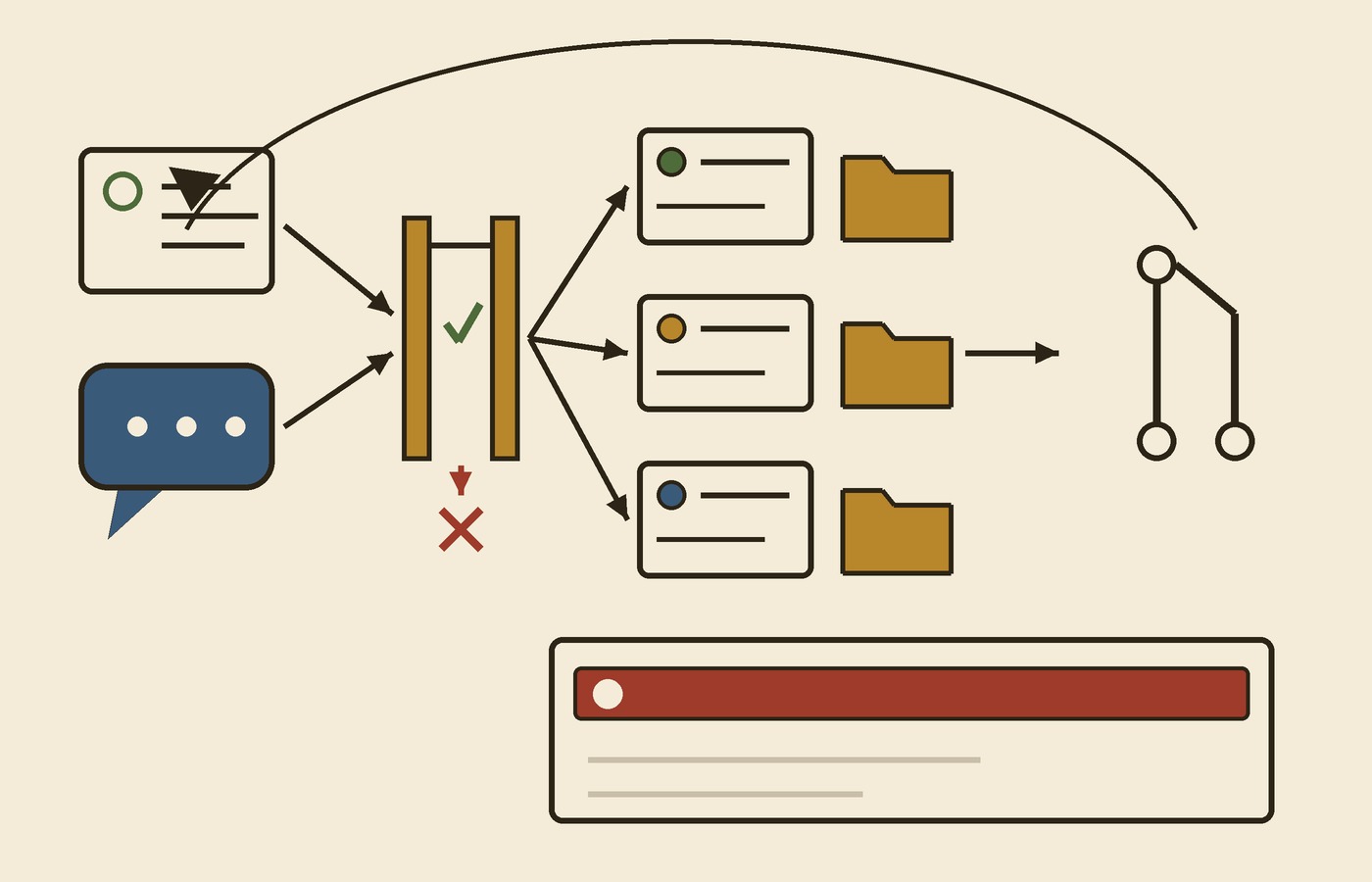
The agent listens to GitHub and, optionally, Feishu, ByteDance’s workplace chat. When someone the team allowed asks it for work, it opens a work item, which the docs call a Ticket. Each Ticket gets its own agent session and its own directory, and the agent answers in the conversation where the request came from, for example with a pull request. A web panel lists what needs a person first, and a healthy state takes no space.
The part I actually like: the rules
The philosophy doc boils it down to one line: take as little human attention as possible, and give as much value as possible. In practice, the agent acts only when asked or when a rule the team wrote allows it, and work nobody asked for starts in a mode that only records what the agent would have done. It confirms a request once, stays quiet while it works, and writes again when a result is ready, when it needs a decision, or when it can’t finish. It asks one concrete question at a time.
The authorization doc is where this gets serious. The host enforces the allowed lists and rules, and messages, comments and quoted documents are only inputs to a decision; they can’t change those permissions. A bot can never make an explicit request, and by default a person who isn’t on the list is ignored even when they mention the agent. That’s a sensible answer to prompt injection through a random issue comment.
What I’d check before running it
- Per the execution doc, worker sessions run commands without approval as the operator’s OS user. Give it a dedicated user or machine, not your laptop account.
- It needs DeepSeek Harness. Setup has many steps, and the README suggests letting your own coding agent walk you through SETUP.md.
- The docs themselves say start narrow: a short allowed list, proactive work only recorded, and widen once what it would have done looks right.
- It comments and opens PRs under accounts your team sees every day, so you own every message it posts. Read them.
According to The Next Web, citing Bloomberg, DeepSeek is aiming this at Anthropic’s Claude Code. I care less about that race than about the design. Most agent launches compete on how much the agent can do. This one is written around when it should stay quiet, and that’s the question every team running agents in a shared repo will have to answer. If you want to try it, I’d point it at a sandbox repo with an allowed list of one, leave proactive mode on record-only for a week, and read what it would have done.
Sources: deepseek-ai/dsh-superagent-prototype on GitHub (README and docs, published October 31, 2026); The Next Web, November 1, 2026. Hero image: Bell in yellow by Koreller, Wikimedia Commons, CC BY-SA 4.0; cropped and resized.