The news is not that Anthropic and the Pentagon made up. It is that a judge in San Francisco wrote the blacklist down as illegal.
Thursday night, CNBC and AP reported the same order: U.S. District Judge Rita Lin said the Department of Defense’s supply-chain-risk designation on Anthropic was unlawful. CNN has the same night stamp.
What the judge actually wrote
I am staying with the quotes the desks published from the order. I have not read all 59 pages myself. AP is the one that gives that page count.
Lin wrote that the government wanted “to make a public example out of Anthropic for its ‘arrogance’ in criticizing the government,” and that this was “not based on any articulable basis to believe that Anthropic would actually sabotage its model.” That line is in AP and CNN.
CNBC quotes the next turn: the Pentagon argued it “cannot trust Anthropic to ensure the integrity of its models” because of how the company talked in the press. Lin’s answer: “Neither the Constitution nor the federal statute invoked by Defendants allows them to impose sweeping penalties based principally on Anthropic’s critique of the Administration’s views.”
CNN has the short version I am keeping: the move “constituted unlawful retaliation in violation of the First Amendment,” and Anthropic “was denied the pre-deprivation process required under the Fifth Amendment.” Also this sentence: “The empty invocation of national security is not a blank check to punish and retaliate against government critics.”
How we got the label
CNBC says the fight was over how the military could use Claude. Anthropic wanted a line against fully autonomous weapons and domestic mass surveillance. The Pentagon wanted unfettered access for lawful purposes. Talks collapsed. In March the DOD named Anthropic a supply-chain risk. CNBC says it was the first American company publicly given that label. The effect: defense contractors could not use Anthropic’s tech on Pentagon work.
CNN adds the part that made the label sting. That designation had been used for companies tied to foreign adversaries. Hegseth’s public line, in CNN’s writeup, was that the military would not be told how to use its tools by a private company. AP dates the public blowup to February, with Trump and Hegseth accusing Anthropic of endangering national security, and Anthropic’s suit landing in March.
I am not litigating who was “right” about drones. I am saying what the court said about the penalty: it read as payback for speech.
One court is not both courts
This is the part a lot of headlines will skip.
CNBC is clear: the Pentagon used two designations, so Anthropic had to sue in two places. Lin’s order is the San Francisco win. The D.C. case is still going. Until that one is done, CNBC says Anthropic “still technically remains a supply chain risk.” CNN and AP both flag the second case. AP also says the government is expected to fight Lin’s ruling.
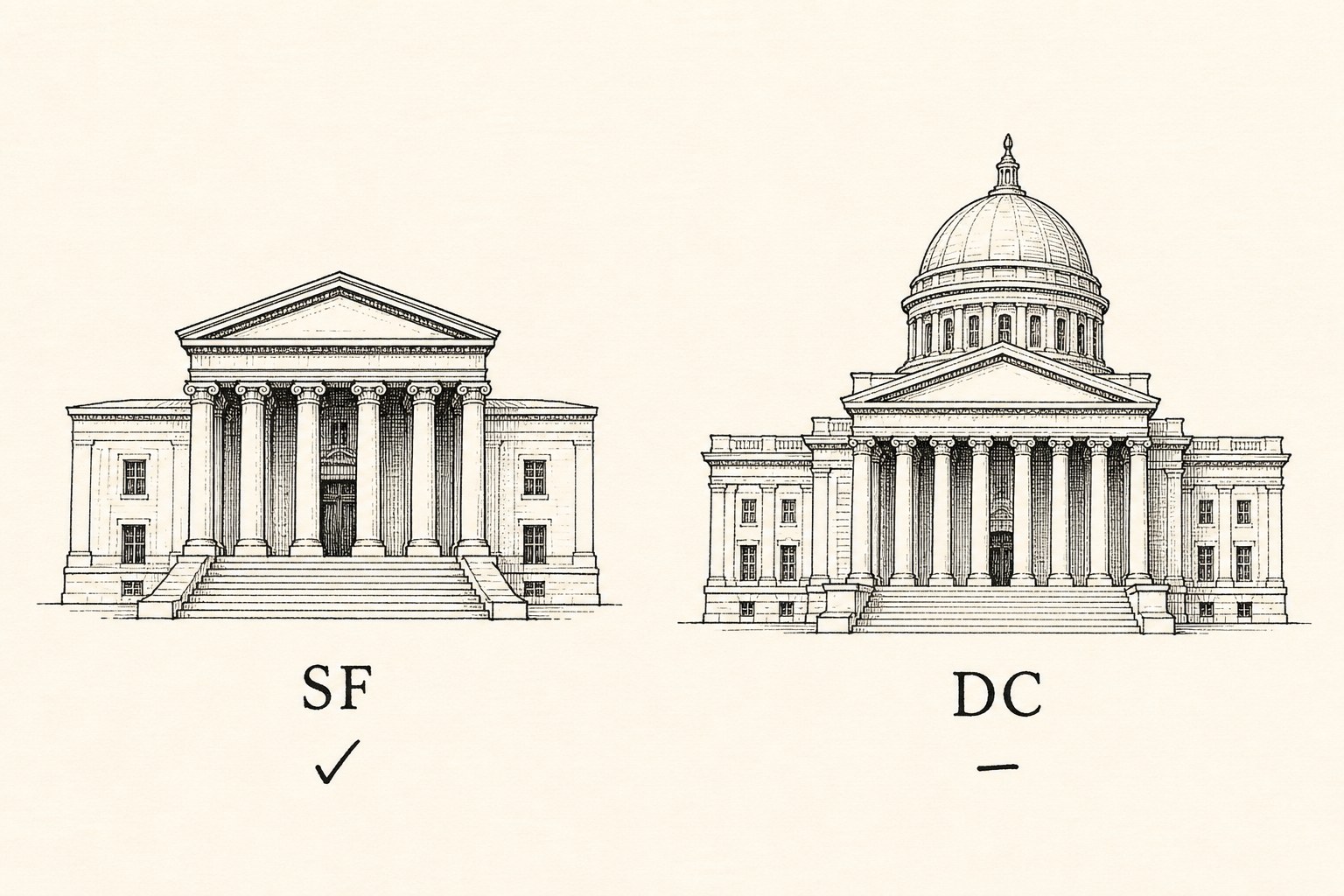
CNN says Lin ordered the designation removed. I am not treating that as “Anthropic is cleared and the Pentagon is back on Claude.” CNBC says these suits would not even force the Pentagon to restart the work. That is a legal win. It is not a contract.
What the company said, and what I am not adding
An Anthropic spokesperson told CNBC they welcome the ruling that the designation was unlawful, and that they “remain focused on working productively with the government to harness AI for our national security.” AP and CNN have the same statement. The White House did not immediately comment to AP. The Pentagon did not immediately comment to CNN.
AP notes OpenAI cut a Pentagon deal hours after Anthropic got punished. That is context, not a second story. CNN also notes that in a June Axios interview, Trump said he no longer saw Anthropic as a national security threat. I am leaving that as CNN’s report of an interview, not as the holding of the case.
If you only read one line, read Lin’s: national security is not a blank check to make an example of a critic. Then read the docket. San Francisco moved. D.C. has not.