From Valencia, Spain, GlobeNewswire via Markets Insider says iPronics closed a $125 million Series B (~€107.6M) for silicon-photonics optical circuit switching aimed at AI data centers. optics.org has the same round: co-led by Maverick Silicon and Light Street Capital. Total funding lands at about $177 million (~€152.3M), per TechnologyTangle.
I’m not treating this as “another AI chip raise.” It’s a bet that the interconnect — light paths between racks — is where copper is running out of road. From Mexico, that copper→optics story feels more useful than another valuation headline.
The flagship is iPronics ONE, a rack-mounted optical circuit switch. Per the company PR and Converge Digest, ONE uses a solid-state silicon-photonic fabric to set programmable optical links within and across racks. Control, telemetry, optical monitoring, and APIs sit on top so operators can reconfigure Layer-1 connectivity for training, inference, cluster growth, and GPU failover — without packet processing inside the optical switch.
Solid-state OCS, not MEMS mirrors
optics.org quotes Light Street’s Shef Osborn calling out a “scalable and cost-effective approach to solid-state optical switching at the interconnect layer.” That’s the pitch vs older MEMS-mirror OCS: no moving parts, denser packaging, faster topology changes. The Register reports company claims of sub-millisecond reconfiguration, 32 ports per chip on ONE today, a roadmap toward 72- and 144-port chips, and — with multi-chip + dense connectors — up to 720 port pairs in a single rack unit. I’m labeling those as Register-reported claims, not my lab numbers.
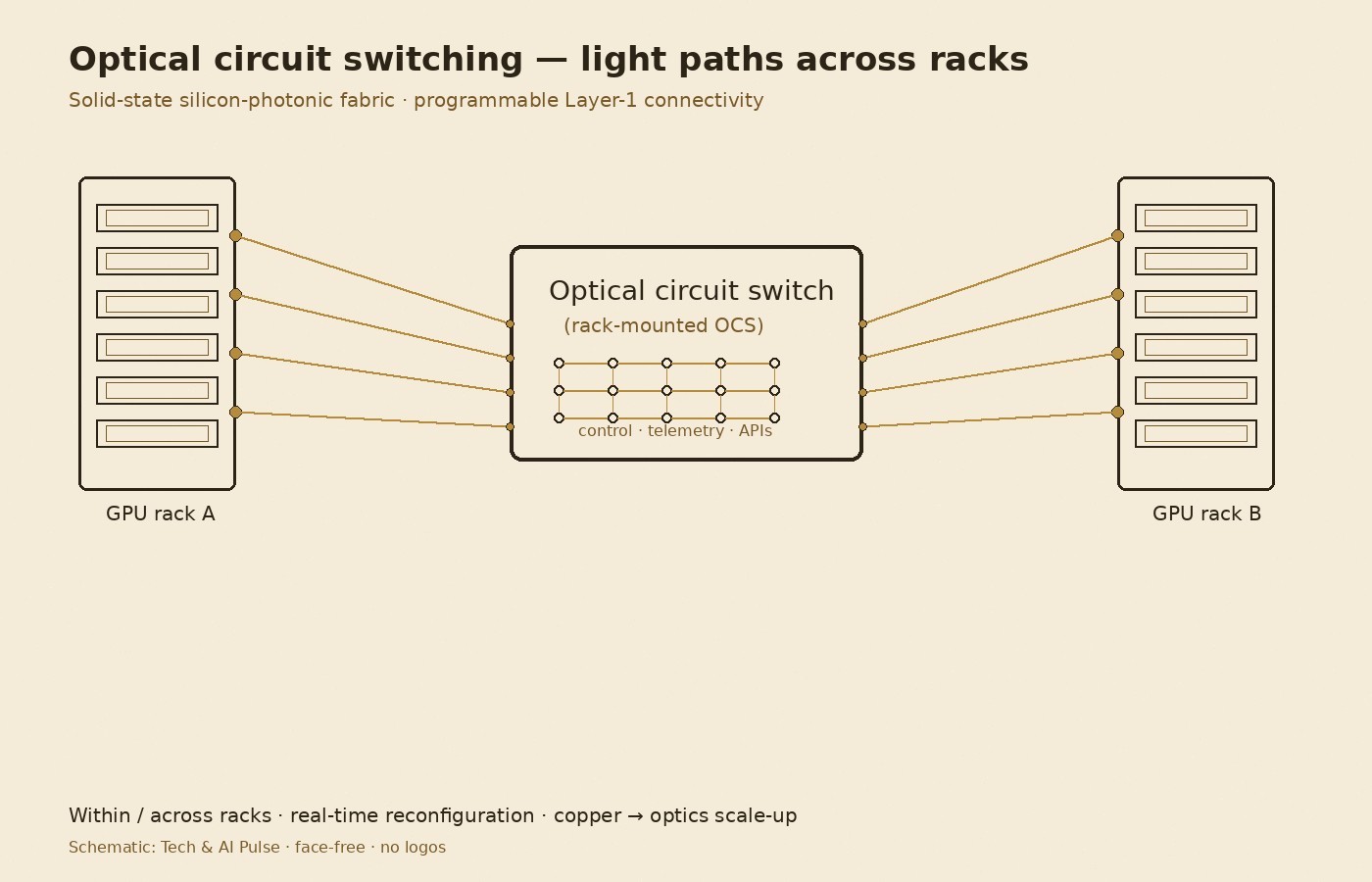
Why now? Scale-up networking is shoving AI clusters off copper. The PR (via Markets Insider) frames OCS as a way to reconfigure connectivity in real time so GPUs stay utilized without ripping out the whole network. Converge Digest is careful: OCS doesn’t replace packet switches; it shines when you can amortize circuit setup across sustained traffic, restriping, failover, or pooling. Google’s Apollo MEMS OCS is the famous production example — iPronics is chasing a lower-radix, rack-mounted, solid-state design point instead of a giant spine box.
Valencia spin-off, Santa Clara office, bigger board
iPronics spun out of the Universitat Politècnica de València in 2019. CEO is Christian Dupont; founder/CTO is Dr. Daniel Pérez-López. The company opened a Santa Clara office and is hiring for product strategy, customer deployments, and AI infrastructure partnerships — all per the same PR roundup on TechnologyTangle and optics.org.
On the cap table and board: Maverick’s Manish Muthal joins the board; Light Street advisor Geoffrey Tate (founding CEO of Rambus) also joins; Young Sohn of Catalight Capital becomes an advisor. Other named participants include Triatomic, Bosch Ventures, Catalight, the EIC Fund, the Tate Family Trust, Fine Structure, Amadeus, Build Collective, and Criteria Venture Tech. The Register and the company PR both note NVIDIA joined the round as a participating investor — not a disclosed supply deal. I’m keeping that distinction.
From Mexico, I’m watching the light layer
From Mexico, I care less about who sat on the term sheet and more about whether AI racks can rewire themselves with light when a GPU dies or a cluster grows. If solid-state OCS actually ships dense and fast at rack scale, the boring interconnect becomes the unlock. I’ll believe the category when more operators publish real utilization and power wins — not just funding decks. Until then, Valencia’s $125M bet is one of the clearer “optics, not copper” checks I’ve seen this week.
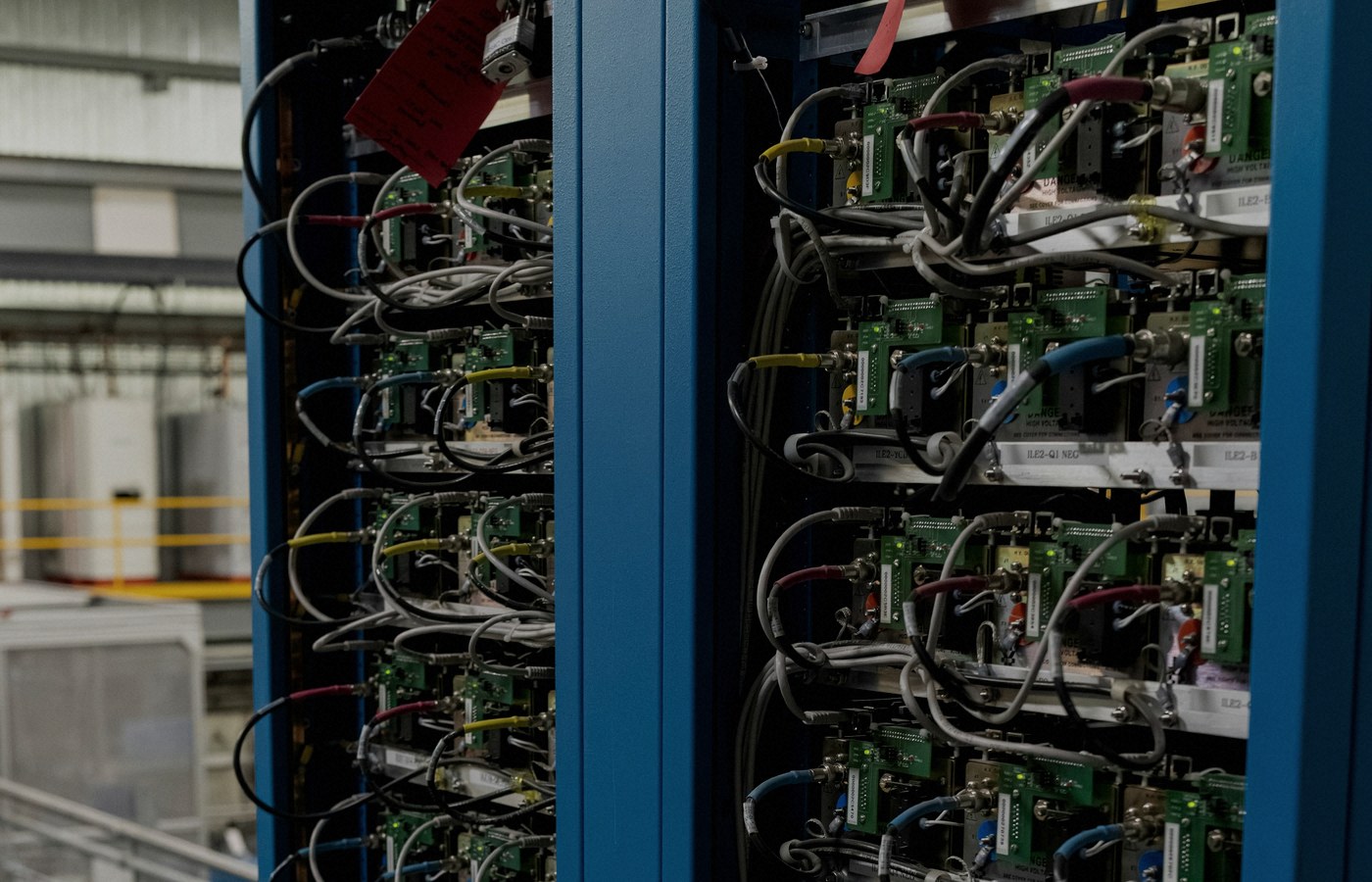
Hero image: two server racks with dense cabling by Eric Stoynov on Unsplash (Unsplash License). Cropped, graded, and lightly grained by Tech & AI Pulse.