
From Mexico, most of the AI coding news I read is about writing code faster: better agents, bigger context, more pull requests. On October 19, doubleAI announced something that points the other way. Its first model, Maxwell, doesn’t write source code at all. According to doubleAI’s launch announcement, it lives inside a running program and keeps improving the machine code underneath it, while the source you (or your coding agent) wrote stays exactly as it was. It’s open for early access now.
What a “code execution model” is supposed to do
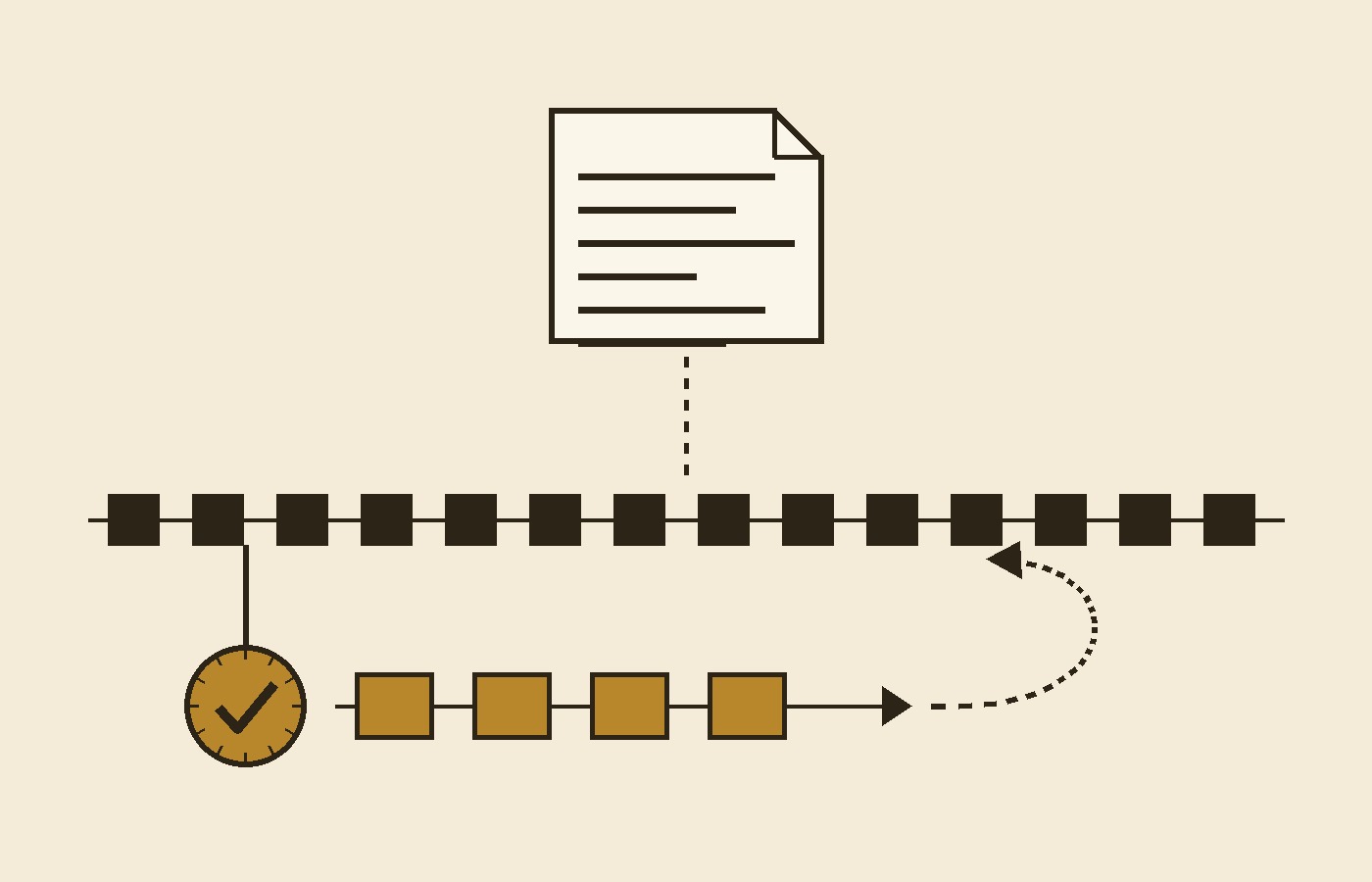
doubleAI calls this a new category, Code Execution Models, and puts it “between code and silicon.” The pitch is a clean split: coding agents work on behalf of the user, and a CEM works on behalf of the hardware. Maxwell watches the program, the machine it runs on and the data flowing through it, then rewrites the binary to fit that exact situation. It runs on CPUs and GPUs, and each faster version becomes the starting point for the next one.
CEO Amnon Shashua summed it up in the announcement: “AI has changed how software is written, but not how it runs.”
The part that matters: proofs, not tests
Changes made while code is running get no human review, so doubleAI says Maxwell formally proves that every rewrite leaves the program’s behavior unchanged. Its manifesto explains that proofs can be conditional: a faster version might only be valid for the kind of data it has seen so far, and if that condition stops holding, a guard hands control back to the original code. The company also says it has formalized Python itself, which is a bold claim for a language where a value can change type from one line to the next.
doubleAI compares this to just-in-time compilers like torch.compile and PyPy, which it says are limited to transformations their engineers wrote in advance, and to classic superoptimizers, which only handle short, loop-free fragments. Maxwell, it says, rewrites whole functions, algorithms included.
The numbers, all from the vendor
- Speech to text on a GPU. The same Python script, 180 Whisper-small transcriptions on one RTX 4090: 106.23 seconds without Maxwell, 49.82 seconds with it, and identical transcripts.
- A graph algorithm on a CPU. NetworkX betweenness centrality, 15 runs: 61.44 seconds down to 17.50 seconds, with identical results.
- A customer pipeline. LTX’s 4K video generation on two B200s went from 250 seconds to 134 seconds per clip.
- The headline claim. Data pipelines more than 38x faster on real-world workloads, and one early customer cutting compute costs by 67%, as doubleAI told The Wall Street Journal, per The Next Web and Quartz.
The business model is interesting too: doubleAI plans to charge a share of what customers save on compute, without saying how big that share is. The company is about two years old, has around 40 people, and has raised $220 million in total.
My take
I like the framing more than I expected to. Right now a lot of us are shipping more code than ever, much of it written by agents, and nobody has time to hand-tune it. A layer that leaves the source readable and reviewable while making it run faster underneath fits that world well. It also avoids the worst version of “AI optimizes your code,” where you get a diff nobody understands.
But I’d wait before getting excited. Every number above comes from doubleAI or its customers, there’s no independent benchmark yet, and “formally proven” is only as strong as what was formalized and who checked it. Access is early and controlled. And there’s a practical question for any team: when the code that runs in production is no longer the code you compiled, how do you debug and profile it? If doubleAI has a good answer to that, this is worth a pilot on a slow data job. If not, it stays a very clever demo for me.
Featured image: “Centrifugal governor in Sluis, Netherlands” by Loracco, Wikimedia Commons, CC BY-SA 3.0. Cropped, resized to 1400×900 and lightly sharpened; the modified image is shared under the same license.