
From Mexico, I’ve always treated git as the one tool I don’t have to think about. It’s just there. So Anthropic’s engineering post from October 13 stopped me: they moved their whole monorepo off git and onto an in-house system called Scion, and the reason is the agents.
Their numbers: in May 2026 they averaged around 2,500 code changes merged per day. By September it was over 30,000. Their framing is blunt: “The bottleneck, now, is all of the developer infrastructure built for human scale: source control, builds, and CI.”
Why git started to hurt
Git’s big idea is that every clone is a full, offline repository. That’s great for people on laptops. It’s not great when the main branch history alone is almost 100 GB, a compressed working copy is over 25 GB, and you run on the order of 25 million checkouts a day for CI. Anthropic says that, fetched naively, would be over 600 PB of git traffic per day. At their peak they ran several hundred internal git mirrors just to cope.
The insight that I think matters for everyone: they were already using git as a centralized system with one authoritative copy, and nearly all their clients were agents and jobs that are online by definition. So they designed for that instead of fighting it.
What Scion does differently
The unit of work is a “changeset,” an entry in a write-ahead log that lists the files changed relative to the first parent, with pointers to the contents in blob storage. Commits, rebases and merges all happen on the server, so there’s nothing to push. Things like blame and path history are computed separately as “derived data,” either eagerly or on demand.
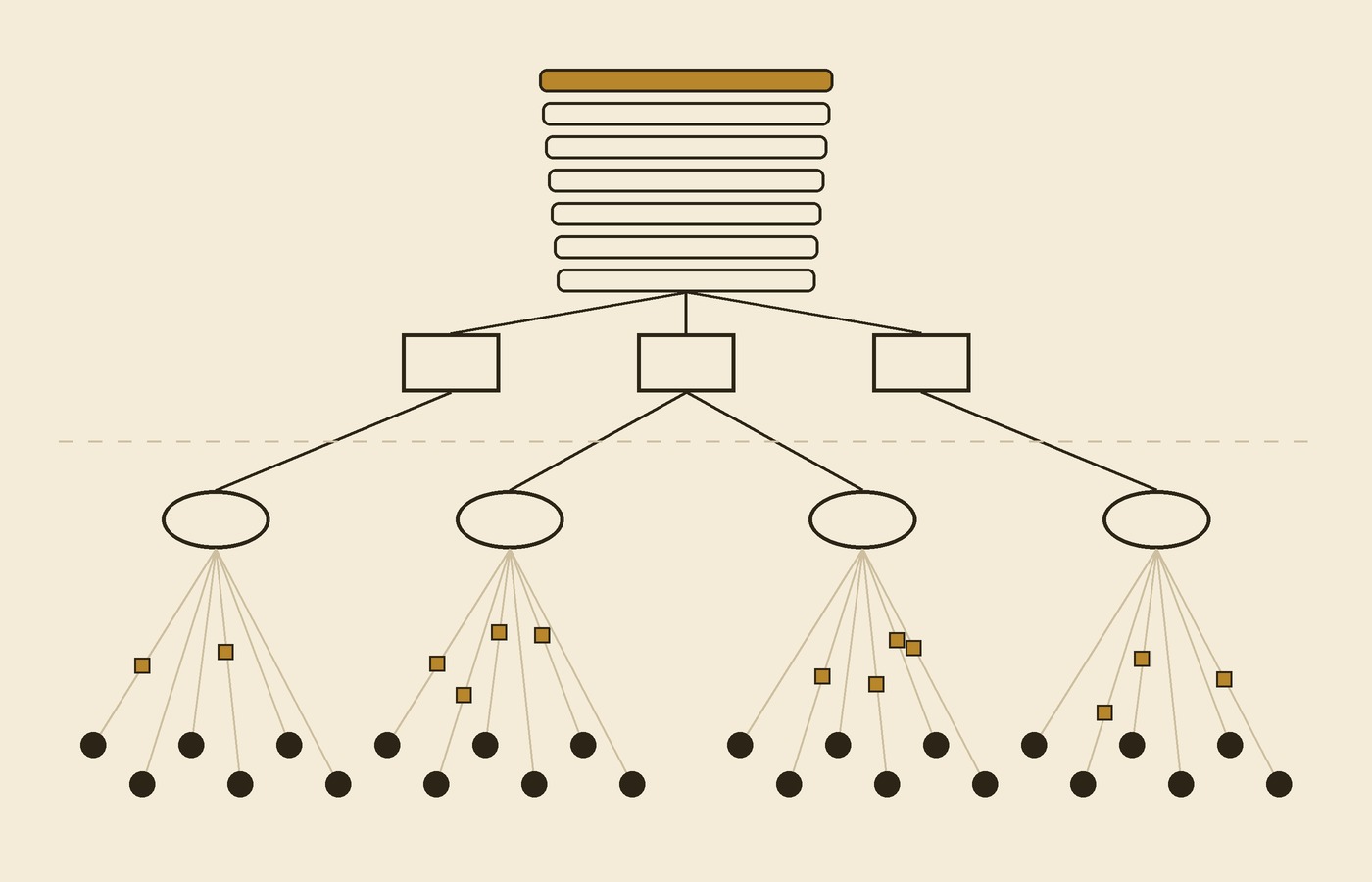
The client is deliberately thin. It asks for the exact trees and blobs it wants, which never change once stored, so any cache tier can answer. Sparse and virtualized checkouts come almost for free. And every query the client uses is also an API, so a lot of CI jobs don’t need a local repo at all. Anthropic says this footprint is 200x smaller than their old git mirroring setup in CPU and memory, checkouts went from minutes to seconds, and CI alone got a 25% CPU capacity win.
The part about engineers
A team of seven built Scion and Antique, their code review tool, and finished the migration in five months. They say every engineer on it would now rate Claude as better at writing code than them, but the humans still owned the system design. Their honest line on agents: “Agents will sometimes violate core system constraints to satisfy a pattern that should never have been allowed in the first place.” Reviewers now look at the intent of each change instead of reading every line.
They also admit a trade-off. They couldn’t replicate a global repository lock on the merge queue, so concurrent changes can conflict, and they lean on post-merge and pre-deploy testing instead. Their bet is that “Claude can typically fix these conflicts faster than humans can even identify them.”
What I’m taking from it
You and I aren’t getting Scion. Anthropic says plainly: “Scion is by no means a suitable replacement for git for general use.” There’s no public release; it only makes sense for enormous monorepos, and it needs its own review, search and CI. What they’re offering instead is ideas for git platforms: server-side RPCs, perhaps standardized across forges, and sparse and shallow features that compose well. They expect more teams to hit this in the next six to 12 months.
For my own work the lesson is smaller but real. If agents are going to multiply how much code lands, the slow part moves downstream: checkouts, CI queues, review. I’d rather measure those now, while they’re still cheap to fix, than discover them when my merge rate jumps.
Sources: Anthropic, “Redesigning source control at Anthropic” (Oct 13, 2026); The Register (Oct 13, 2026).
Featured image: “Apple tree grafting 2,” photo by Karelj, Wikimedia Commons, public domain. Cropped and resized to 1400×900 and lightly sharpened from the original upload.