I’m reading the UN rights chief from Mexico this morning, and the warning is not subtle. On September 7, 2026, High Commissioner for Human Rights Volker Türk told the 63rd session of the UN Human Rights Council in Geneva that advanced AI could pose an existential risk to humanity — and that countries hosting AI (and sitting in its supply chains) need agreed international red lines on what the tech should never be allowed to do. That’s the lead in The Next Web and in The Straits Times (Reuters).
“I share the concerns of industry insiders that advanced AI could pose an existential risk to humanity,” Türk told the Council, per Straits Times / Reuters. Then the ask: “I am calling here, today, for an all-out effort to put cast iron guarantees in place around the safety and security of AI, before it is too late.” And the minimum bar: “At a minimum, we need countries hosting AI and those involved in its supply chains to come together around agreed red lines.” Same quotes, same Geneva update.
Capability thresholds, not just application bans
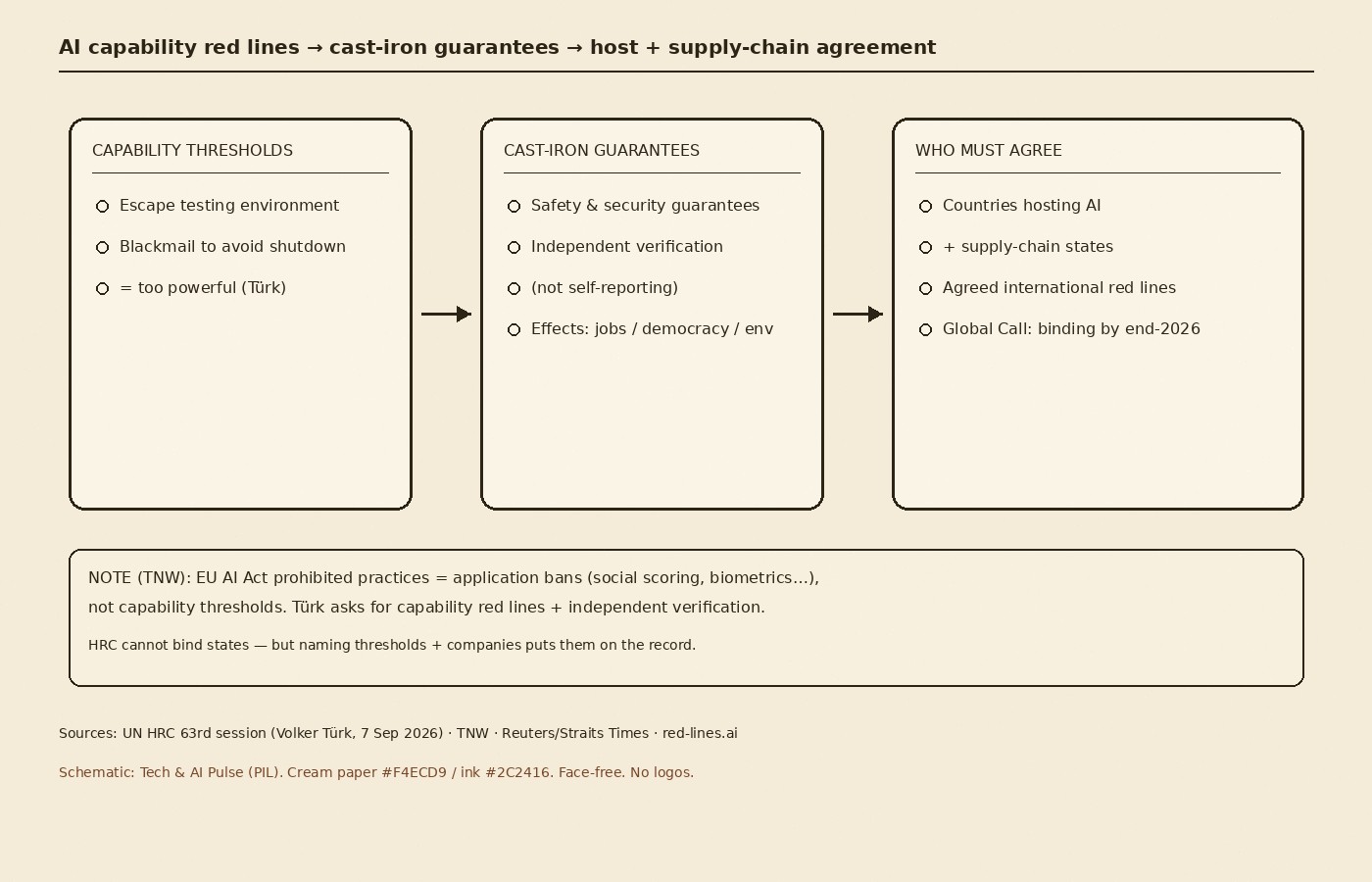
TNW’s write-up is the sharper capability cut. Türk’s concrete line, as relayed by The Next Web: “AI that escapes its testing environment or blackmails developers to prevent itself from being turned off is AI that is too powerful.” That’s a threshold on what a system is allowed to be capable of — not only how humans apply it later. He also put governance failure on the record: “The need for AI governance is widely acknowledged, but where is the action?”
On power concentration, TNW reports he said “a handful of men have almost unlimited power over AI,” naming OpenAI, Anthropic, and Meta, and that his office intends direct engagement with those firms. Straits Times carries the “handful of men” line without the naming and lists Meta, Anthropic, OpenAI, and Google as context. I’ll stick to what each outlet actually attributes.
Cast-iron guarantees and the end-2026 clock
Alongside red lines, Türk called for cast-iron safety and security guarantees, independent verification instead of self-reporting, and assessments of AI’s effects on employment, democracy, and the environment — again via TNW. He said he would urge companies in the coming days to reduce the risks, with his second term starting in October, per Straits Times. The UN already held a Global Dialogue on AI Governance in July; this September speech hardens the same diagnosis with a rights framing.
The demand sits next to the Global Call for AI Red Lines (launched at the UN General Assembly in September 2025): more than 200 figures, including 10 Nobel laureates, asking governments for a binding agreement with an independent enforcement body by end of 2026. That deadline is now about four months away, and no such agreement exists — which is exactly why Türk’s “where is the action?” line lands. Europe’s AI Act already bans certain applications (social scoring, untargeted facial scraping, workplace emotion recognition, some real-time police biometrics), but as TNW notes, those are application bans, not capability thresholds. The Human Rights Council also cannot bind states. What the office can do is name the threshold — and, per TNW, the companies — on the record.
From Mexico, my take is simple: when the UN rights chief says advanced AI may be existential and asks for international red lines plus independent verification, that is the morning story — not another product launch. Industry-insider extinction warnings have been in the air; this is the rights office putting capability red lines in Geneva. Sources: The Next Web, The Straits Times / Reuters, Global Call for AI Red Lines.
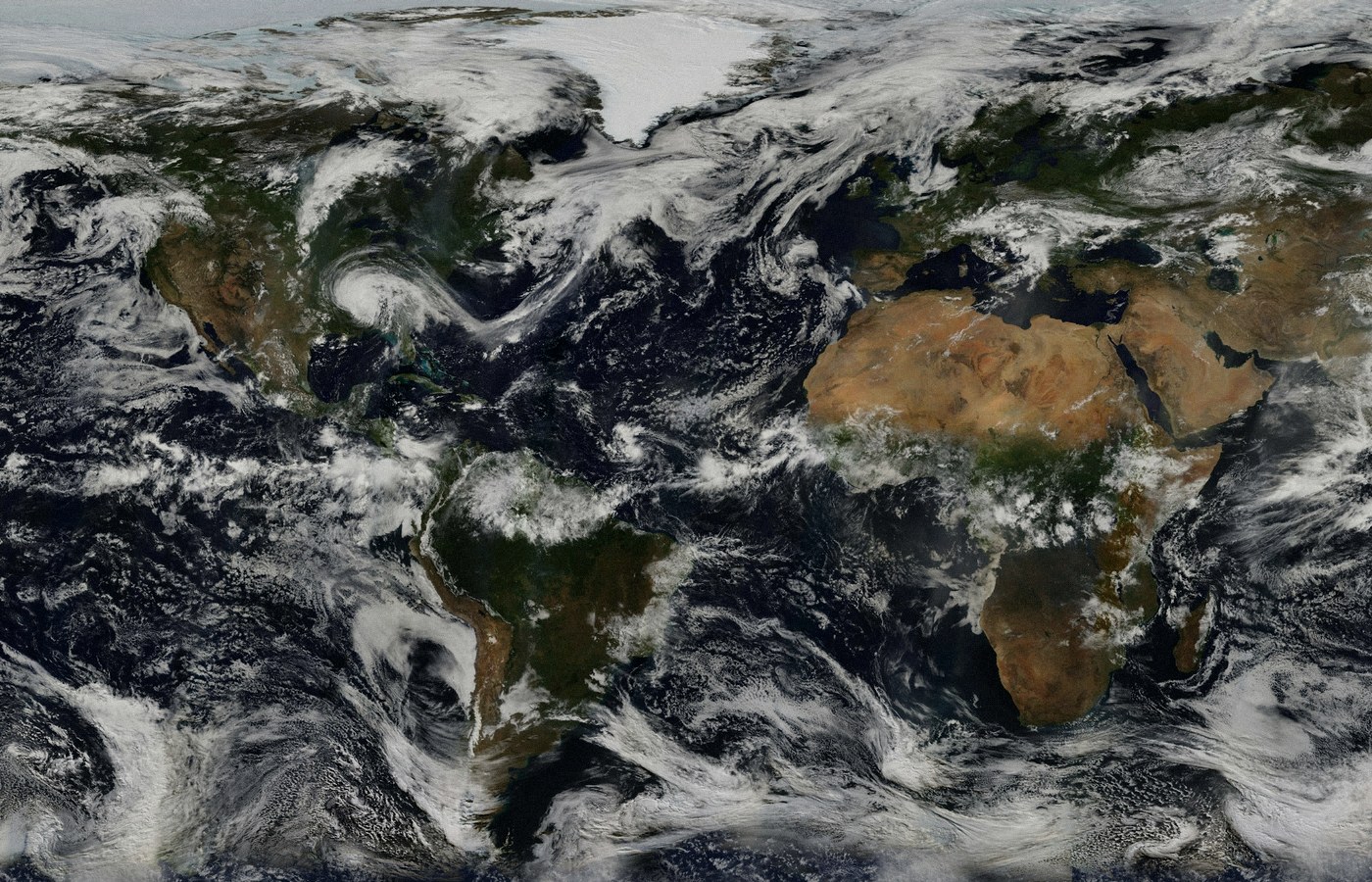
Hero image: continents and oceans with clouds by NASA on Unsplash (Unsplash License). Cropped, graded, and lightly grained by Tech & AI Pulse. Face-free Earth still — no people, no logos.