Bloomberg reports that Gimlet Labs raised about $300 million in a new round that takes the company to a roughly $3 billion valuation. CEO Zain Asgar confirmed the raise in an interview. The round was led by Andreessen Horowitz, with new backers Arm Holdings and Microsoft’s venture arm M12. I’m treating those numbers as Bloomberg + CEO-reported — not a formal audited company PR.
That caveat matters. FourWeekMBA’s roundup says the same thing up front: revenue, customer count, and traction weren’t disclosed. A $3B mark is a bet on a thesis. It isn’t proof the thesis already paid off. From Mexico, I’d rather say that plainly than dress it up.
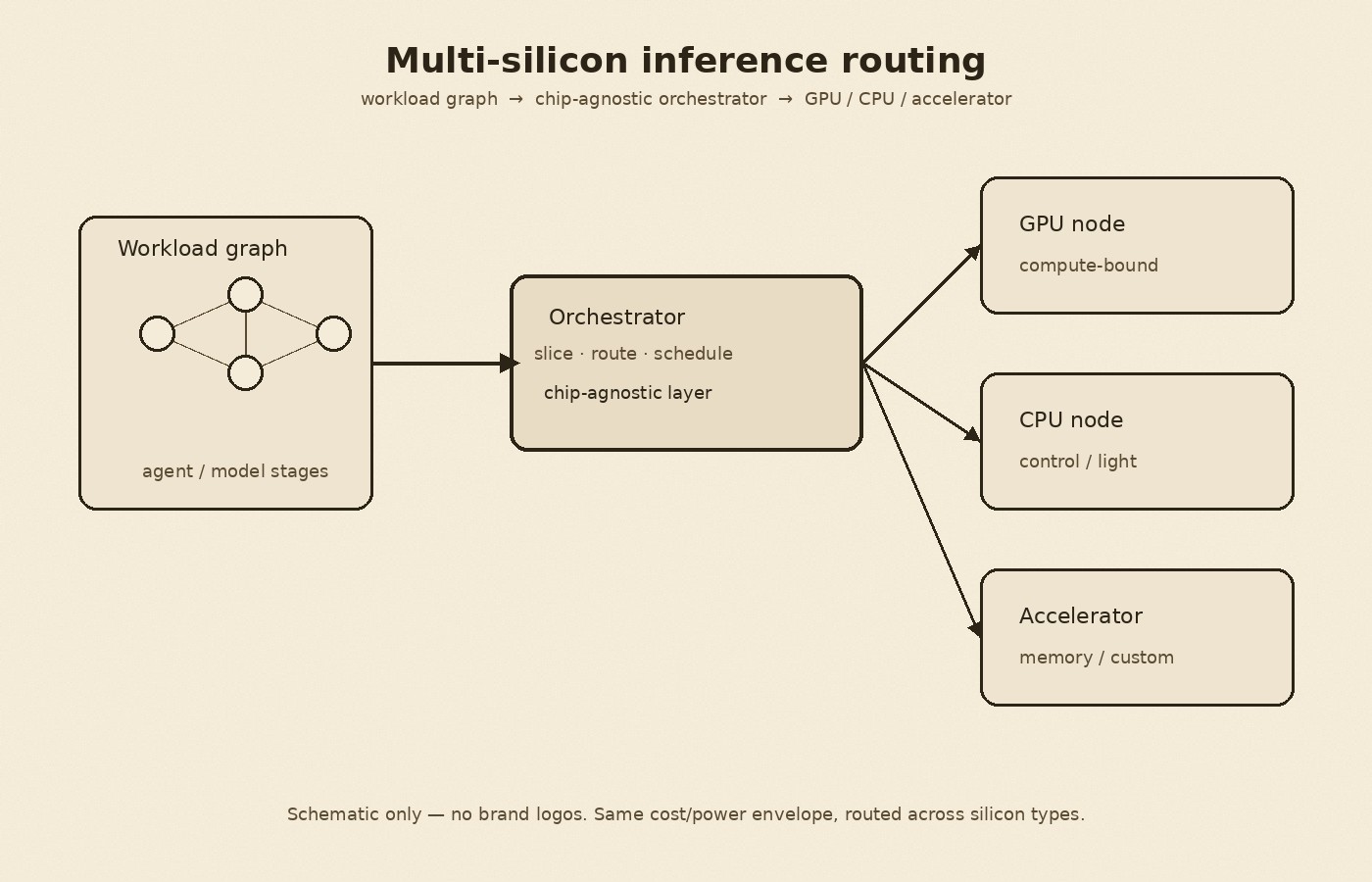
What Gimlet builds is the interesting part. Per Tech Funding News and the company’s own October 2025 intro, the software splits AI inference workloads across different chip types — GPUs for some stages, CPUs or specialized accelerators for others. They call it a multi-silicon inference cloud. The company claims about 3–10× inference speed for the same cost and power envelope. I’m quoting that as their claim, not my benchmark.
Chip-agnostic routing, not another custom ASIC
Gimlet’s blog describes an intelligent workload orchestrator that turns agents into compute graphs, slices those graphs, and maps fragments onto the hardware that fits. There’s also a hardware-agnostic compiler and autonomous kernel generation. The pitch isn’t “we designed a better chip.” It’s “you shouldn’t have to pick one chip family for every stage.” Bloomberg notes Asgar said they’re also collaborating with Arm so the software works across forms of Arm’s chip technology.
TFN adds that deploying the software pushed Gimlet into data-centre configuration too — different chips need different cooling and layouts. Prior rounds, per the same write-up: a $12M seed (Factory + angels) and an $80M Series A led by Menlo Ventures. Co-founders include Asgar, Michelle Nguyen, Omid Azizi, Natalie Serrino, and James Bartlett — the Pixie / New Relic lineage shows up again and again in coverage.
Why Arm and M12 on the same cap table
FourWeekMBA reads the syndicate as strategy, not just capital: Arm wants a world where inference doesn’t default to one architecture; Microsoft’s M12 sits under a cloud that has been pushing its own inference silicon. I’m not claiming either company said that out loud in this round. It’s analysis grounded in what those firms already do. Still — when the product is vendor-agnostic routing, and the new checks come from an architecture licensor and a hyperscaler building its own accelerators, the composition is the story.
From Mexico, I’m watching the routing layer
From Mexico, I care less about another unicorn headline than about whether inference buyers can actually move stages between silicon without rewriting everything. Cheap tokens matter more when you can route them. Gimlet’s bet — as told to Bloomberg and unpacked by TFN — is that the orchestration layer becomes infrastructure. I’ll believe the category when more shops publish real cost-per-token wins across mixed fleets. Until then, I’m glad someone’s raising for the router, not just another wafer.
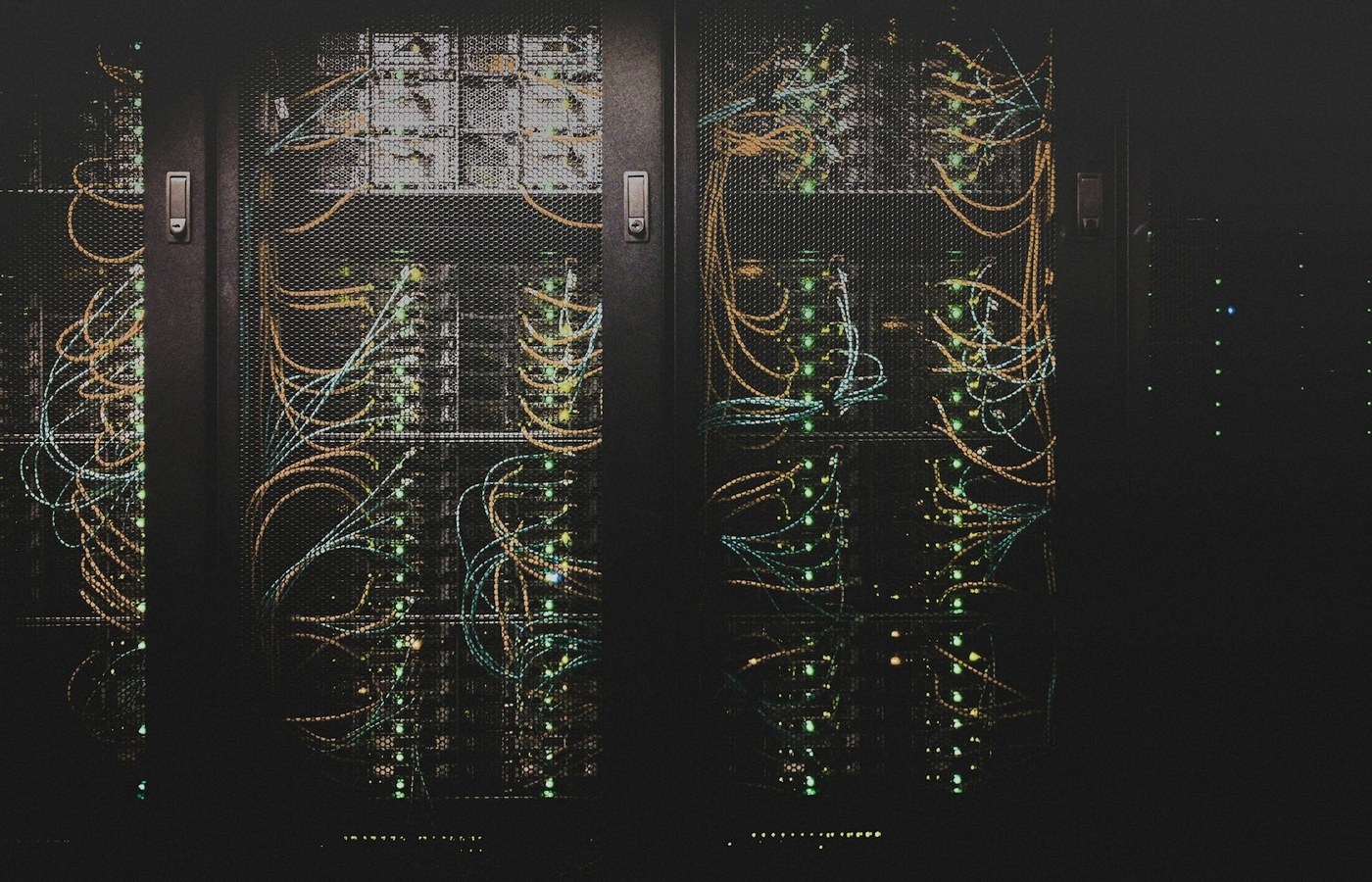
Hero image: server racks / cable network by Taylor Vick on Unsplash (Unsplash License). Cropped, graded, and lightly grained by Tech & AI Pulse.