Coding agents are pretty good at finding text that looks like other text. They’re less good at remembering how those facts hook together — which symbol calls which, which decision rests on which note, what a change actually touches. On November 11, Neo4j announced Relate, an open-source embedded graph database it says is built for that kind of work, and that it is launching the project at NODES 2026.
Per the company blog, Relate runs as a library inside your application process, as a CLI in a sandbox, or as WASM in a browser. There’s no separate database server to stand up, Neo4j says: you install it, and it stops when the application does. That’s the company’s framing. You still install a package, and a durable file is yours to manage.
What Neo4j says a coding agent can do with it
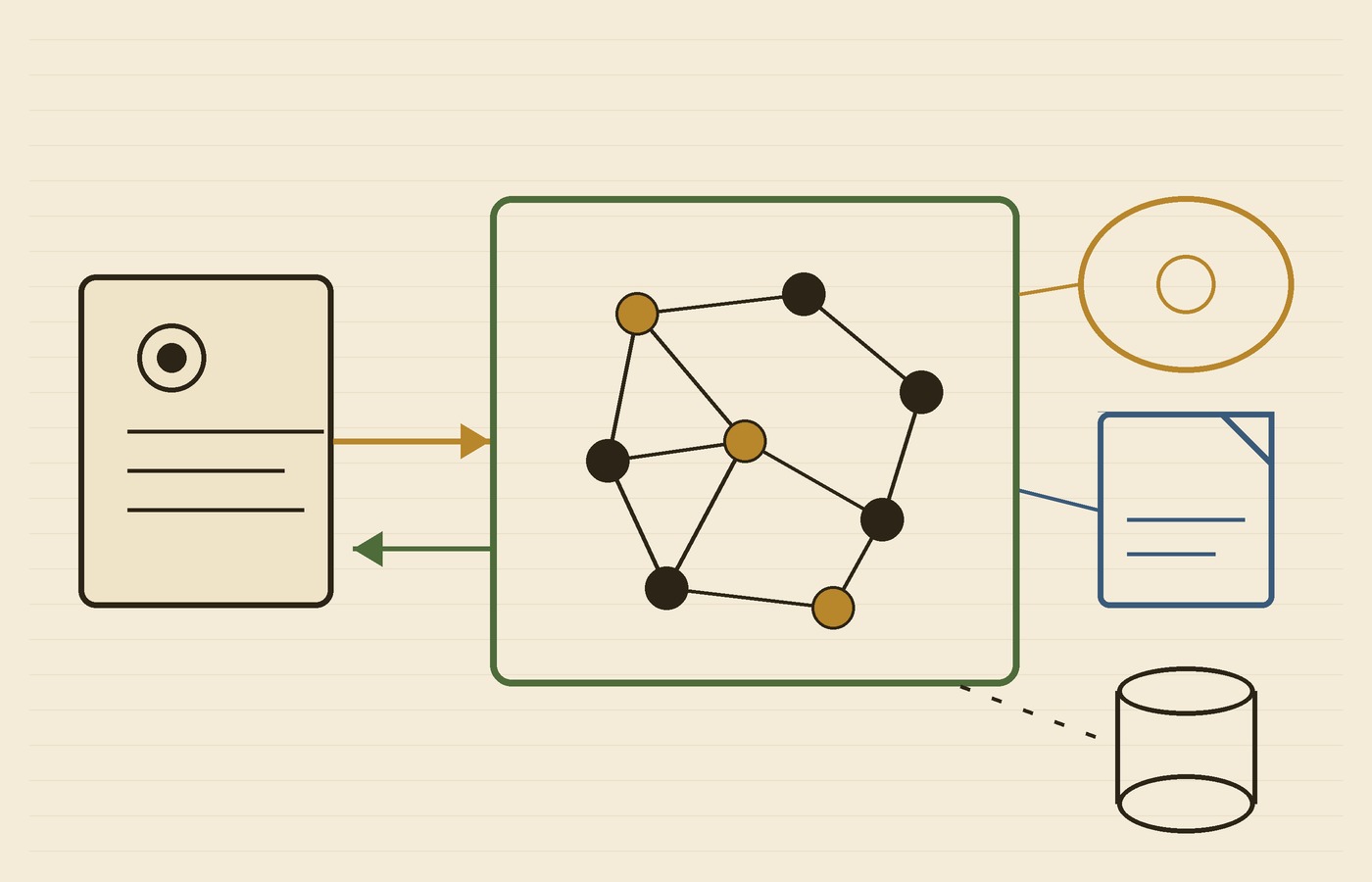
The blog says one command installs a skill into the agents you already use — it lists Claude Code, Cursor, Windsurf, GitHub Copilot, Antigravity CLI, Cline, Codex, and Pi — and a separate command starts an MCP endpoint. Agent mode returns JSON or Toon, caps how many rows come back so a large result doesn’t fill the context window, and returns structured errors with a retryable flag.
The software-engineering use I’d actually look at is codebase context: a graph of a repo’s symbols, calls, and owners that a coding agent can query as it works. Neo4j says that graph stays local to the repo and the editor, with no service to run. There’s also session memory, per-user graph files, and a sandbox path that can pull a slice of a larger graph from Neo4j Aura, analyze it, and throw the local copy away.
In a company demo, a coding agent uses throwaway Relate instances — one isolated graph per dependency — to audit a project’s direct dependencies for known advisories and unmaintained packages, then deletes the databases. That’s Neo4j’s demo, not a result I ran.
“Local” is one mode, not a guarantee
You choose how long the data lives, the blog says. Run Relate in memory for a disposable session, or use a directory or a single file, where writes are saved transactionally to disk. That file can be shared or checked into GitHub. And if a project outgrows local use, Neo4j says you can move the shared context over to Aura. So “stays local” describes one path. I wouldn’t treat it as a promise that data never leaves your machine.
Vendor claims to keep in that column
The blog claims millisecond startup and submillisecond queries for ephemeral sessions, and that Relate ran more than 30,000 test scenarios for openCypher, Cypher 25, and GQL. The company press release adds that Relate is released under the Apache 2.0 license, that it is “100% openCypher and more than 97% GQL compliant,” and that it “brings multihop reasoning capabilities and GraphRAG to AI agents for more accurate results and fewer hallucinations.” Those accuracy and hallucination lines are Neo4j’s claims. There’s no rate or comparison study in the announcement to check against. I’ll treat the millisecond figures the same way.
What I’d check before leaning on it
- Try the local codebase-context path on a small repo you already understand. The interesting question is whether the graph the agent builds actually helps it trace a change — not just whether the first query returns.
- Watch the row cap and memory limits. Neo4j documents caps so a large result doesn’t crowd the context window. I’d want to see what gets truncated on a real repo graph.
- Don’t treat “no server” as “no operational choices.” In-memory, a local file, a shared file, and Aura are different trust boundaries.
- Don’t budget “fewer hallucinations” from the press release. There’s no figure in the announcement to hang that on.
If you already live in a coding agent and you’re tired of stuffing connected facts into a JSON file, that’s the part I’d actually test: can the agent build a useful graph of your repo, locally, and query it as it works?
Neo4j says Relate is available today, and points install instructions at relatedb.ai.
Hero photo: Dew on a spider web by Luc Viatour, via Wikimedia Commons, CC BY-SA 3.0; cropped and resized.