Most of the agent talk this year stayed on screens. Anthropic just put a stake in the physical lab.
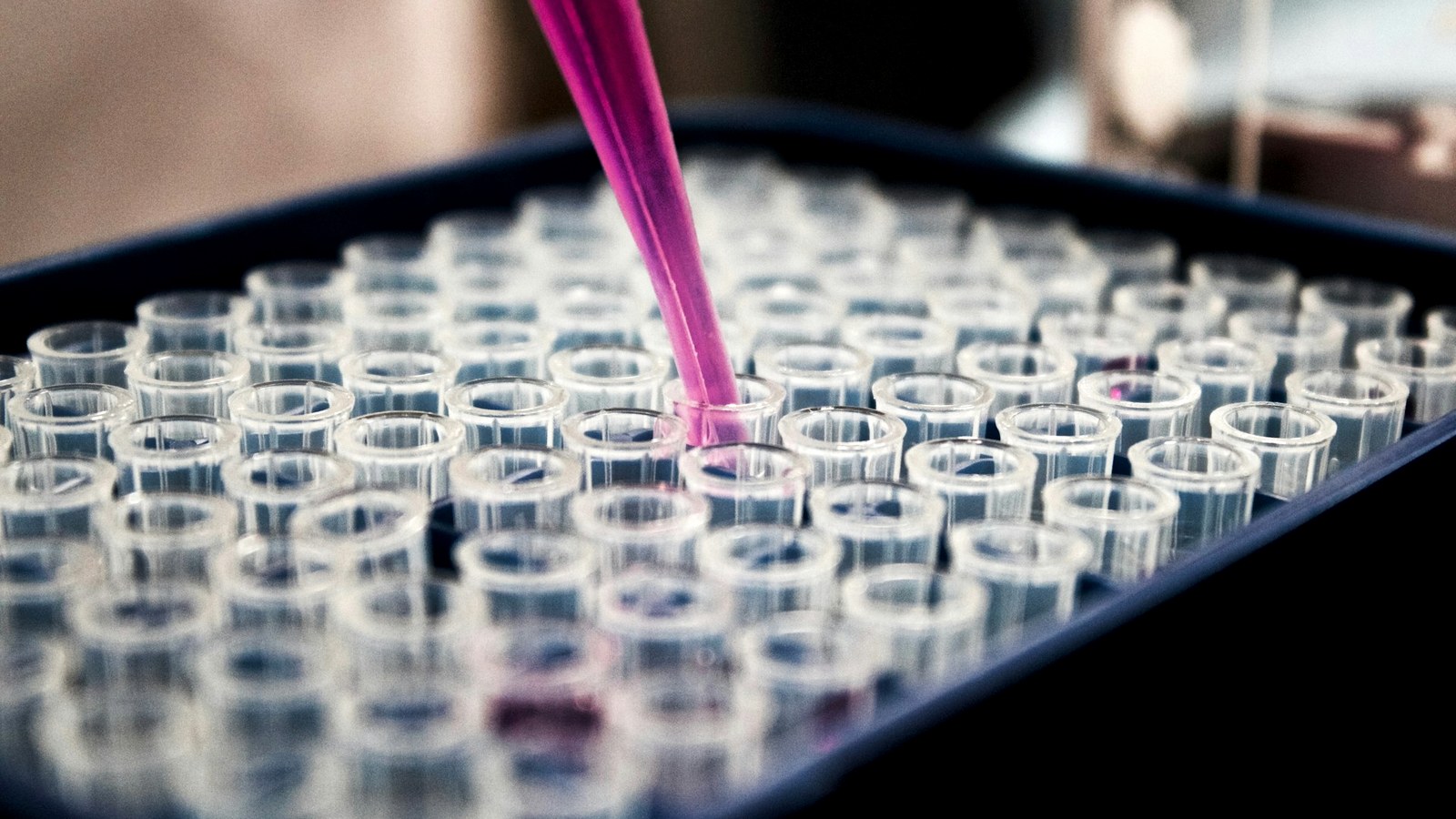
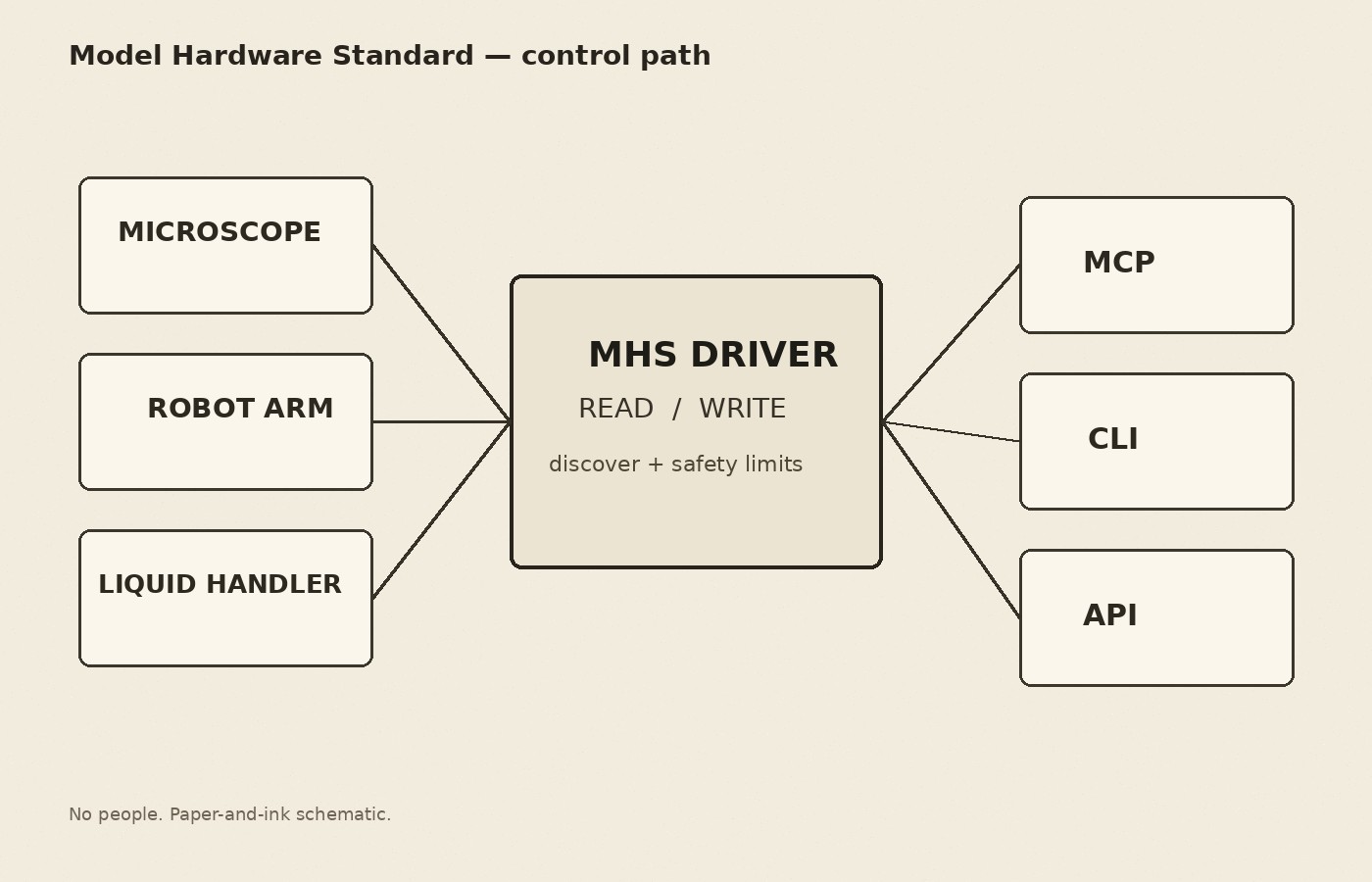
On August 27, Anthropic opened a research preview of the Model Hardware Standard, or MHS. The short version: a shared specification so AI agents can discover and operate physical devices — microscopes, liquid handlers, robotic arms — without a custom integration for every box. The Register covered it the next day as plumbing for agents that want to touch real gear.
What it actually is
I am staying with Anthropic’s own page here, not a third-hand explainer. MHS started as a collaboration with HHMI Janelia Research Campus. The pitch: labs usually spend weeks or months wiring instruments that do not speak to each other. Anthropic says MHS cuts that integration work to hours or minutes.
The core is a standardized driver. Simple primitives like “read” and “write.” Devices become discoverable in a common format. The driver can also carry machine facts that code alone does not show — weight of an arm, safety limits — including notes a user can write in natural language. Agents then talk to hardware through three paths Anthropic names: MCP, the command line, and API code files.
One line I am keeping: MHS is model-agnostic and meant for any device with a programmable interface. That is Anthropic’s claim on the launch post, not my lab test.
Early pilots, with the caveats attached
The partner stories are on Anthropic’s page. Genentech used MHS as a proof-of-concept for a BCA protein assay across a liquid handler, a robotic arm, and a plate reader. Carnegie Mellon reported serial-dilution dose-response runs about three times faster with an agent orchestrating gear across three computers. HHMI Janelia used it to unify a microscopy rig that previously needed seven vendor programs. QuEra gave an agent control over parts of a quantum laser system and says the agent’s controller recovered laser lock 99.3% of the time without human intervention.
I am not re-running those experiments. Those numbers and setups are Anthropic’s partner writeups. Treat them that way.
Hardware and software vendors are also lining up support, per the same post: AWS (Strands Robots), Automata, Danaher, Doosan Robotics, MBF Bioscience, QIAGEN, Tecan, Universal Robots, plus early work with Hugging Face’s LeRobot and Raspberry Pi.
What it is not yet
This is a research preview for selected labs and manufacturers, not a public open-source drop. Anthropic says it wants more safety evaluations and a physical safety roadmap before open-sourcing. It also says Claude still lacks physical intuition — Genentech had to coach the model that foaming samples were a physical failure, not a software bug. Devices without a programming interface are out for now.
The Register is blunter on the optimism: Anthropic wants agents to “safely operate physical devices” while the industry still cannot fully anticipate how models behave. That tension is the story. MCP made software tools easier to plug in. MHS is the same idea pointed at metal and glass — with the blast radius that implies.
If you only need one takeaway: agents are leaving the chat window. The preview waitlist is on Anthropic’s site. Open source is promised after the safety work, not before.