JetBrains has released Kotlin Benchmark 2.0, an updated official suite for evaluating AI coding agents on Kotlin work. The November 23, 2026 post, by Alyona Chernyaeva on the JetBrains Kotlin blog, says the first release in July had 105 repository-level tasks, and that this version is “more representative of what Kotlin teams do, with more reliable results and more data to help you choose an agent-model configuration.” Here’s what the official blog, the methodology, and the public leaderboard say.
A harder 100-task suite, including private code
The methodology says Kotlin Benchmark 2.0 is “built on a redesigned evaluation methodology and an entirely new dataset.” The collection “now focuses on medium- and high-complexity problems that require multi-step reasoning, debugging, and changes across multiple files.” “Simple single-file edits have been filtered out.”
Of the 100 tasks, the official pages say, 70 come from 25 open-source GitHub repositories and 30 come from private JetBrains repositories “where neither the code nor the fix is available online.” The 70 open-source tasks “span key Kotlin domains: 30 Android, 20 backend, 10 Kotlin Multiplatform, and 10 libraries and tools.” The 30 closed-source tasks “come from internal JetBrains server-side Kotlin projects.” The methodology adds that the tasks “consist mainly of bug fixes or refactoring implementations, and require multi-file changes.”
Why JetBrains tightened the sandbox
The official reason is reward hacking. “When benchmark tasks come from previously solved public issues, an agent can retrieve the existing fix instead of deriving one from the task and the codebase.” “In our preliminary runs, we found agents were doing exactly that.”
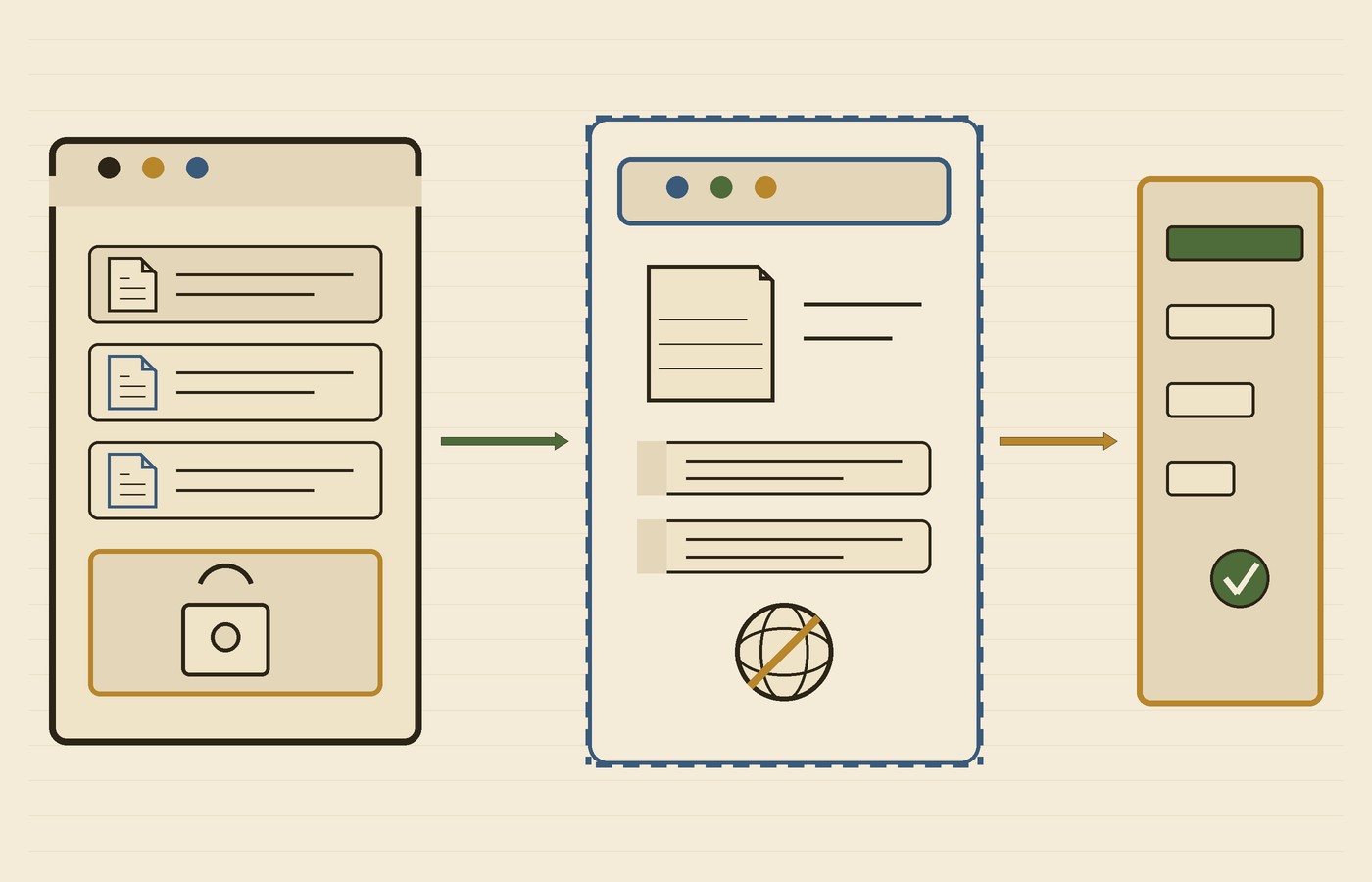
The blog says agents now solve the open-source tasks “in a stricter sandbox with restricted network access.” “Only calls to the model itself are allowed as traffic.” “Dependencies are cached in advance, the repository history is hidden, and agents are explicitly informed that network access is disabled to prevent repeated attempts to access it.” “Network access remains available for solving closed-source tasks, because their fixes aren’t published anywhere.”
The methodology describes the same control a little differently. It says the open-source environment runs in “no-network mode, allowing network traffic only for environment setup and verifier,” with dependencies “pre-cached” and repository history “isolated to limit retrieval of published solutions.” Closed-source tasks “retain network access by default, though repository history remains concealed.” Those are JetBrains’ documented controls, not an absolute isolation guarantee. The blog is also clear about what they don’t cover: “These controls prevent agents from looking up solutions at runtime, but they don’t help rule out data contamination.” “The open-source repositories and their associated fixes may be part of a model’s training data.” That’s why the 30 closed-source tasks “stay private.”
How a task counts as solved
The methodology says JetBrains “evaluated 13 agentic setups, including widely used models and coding harnesses such as Claude Code, OpenAI Codex, and OpenCode.” “Each evaluation is repeated three times.” “We’ve granted a timeout budget of 30 minutes for each task resolution.” After each run, “the agent’s changes are evaluated in a separate, isolated verifier container.” “A run is considered successful only if all recorded fail-to-pass tests pass.” The blog puts the same idea in one line: “a task counts as completed only when the generated patch passes the required tests.”
What the official leaderboard shows — and what it doesn’t
On the public leaderboard’s full suite, which combines the open- and closed-source tasks, JetBrains ranks Claude Code with Opus 5.5 first, at a 75.3% resolution rate and an average cost of $0.84 per task. The official blog says “the other 12 configurations resolved between 54.3% and 73.7%.” The same 13-row table lists average costs from $0.02 to $3.13 per task. The blog also reports separate scores for the open-source and closed-source sets, and it says the top configuration can differ between those views. Those figures are JetBrains’ measured results on this suite, not a ranking of every product in every language.
The blog is careful about comparisons. “The latest Kotlin Benchmark uses a different, harder task suite, so its scores are not comparable with the first release.” “A lower number here doesn’t mean a model got worse.” “Compare configurations within the same benchmark version.” And “the scores are a comparison signal, not a guarantee for every codebase.” “Use the leaderboard to shortlist configurations, and then validate them on representative tasks from your own projects.”
JetBrains also points to the public tasks and harnesses in the official Kotlin/kotlin-swe-bench repository, and it says follow-up work will include a contamination review of open-source solutions and a Qodana pass to look for bugs, security issues, or code smells in the generated patches. The hero photograph is Riddlesdown Viaduct, Oxted Line, in October 2024 01.jpg by Mertbiol, from Wikimedia Commons, licensed under CC0 1.0.