
On November 12, Google introduced Gemini 4 Hydrogen, a model it says is built for everyday coding and agentic work — writing code, running tests, and verifying changes — rather than for the long-horizon reasoning it assigns to Gemini 4 Carbon and Gemini 4 Argon. The same day, the Antigravity blog added a model-selector option called Orchestrator, which pairs a larger planner with Hydrogen in a single session and, Google says, hands control back when the work hits friction.
That’s a handoff story, not a “classify the prompt and send the whole job to one model” story. The docs are explicit about the difference.
What Orchestrator actually does
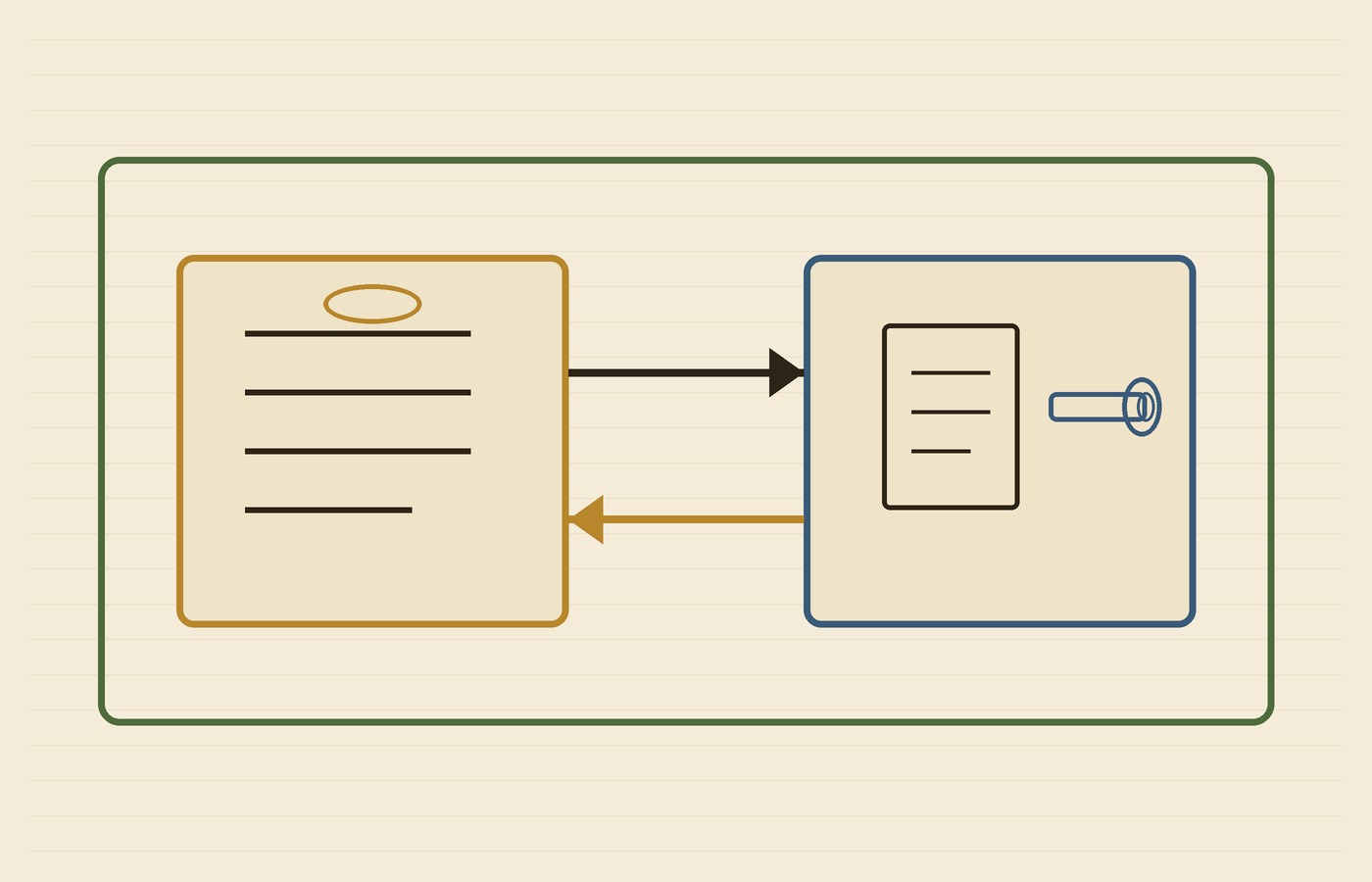
The Antigravity models docs describe Orchestrator as a model-selector option, not a separate agent. It “isn’t a router that classifies your prompt upfront and sends the whole request to a single model.” Both models stay in the same task and hand control back and forth as the work unfolds.
Each message, the docs say, starts with a read-only planning phase. The planner — Gemini 4 Carbon or Gemini 4 Argon, depending on which Orchestrator option you pick — explores the codebase, resolves ambiguities, and writes a concrete plan, including the conditions that should trigger re-planning. Hydrogen then takes over to apply file edits, write code, run builds and tests, and check the results against that plan.
If Hydrogen hits friction — the docs give examples such as a verification step that fails twice, an interface that behaves differently than expected, or a design choice the plan didn’t settle — it hands control back. The planner inspects the conversation state, repairs the plan, and returns execution to Hydrogen. On longer tasks, and whenever you send a message while Hydrogen is working, the planner also reviews progress against the plan.
Those hand-offs happen automatically inside a single response, the docs say, so you don’t switch models yourself between planning and execution. The tradeoff is that Orchestrator runs with a fixed configuration: you can’t set a thinking level on it. If you want every step on one model, or you want to pick a thinking level, you select Carbon, Argon, or Hydrogen directly.
Hydrogen on its own, and the numbers Google is citing
Hydrogen also ships as a standalone model. The Antigravity post says you can set reasoning depth across four thinking levels — low, medium, high (the default), and a new xhigh tier. The models docs call that fourth level Extra in the app selector, and say it maps to the Extra High / xhigh budget in the CLI.
Google’s own figures, not mine: the company says Hydrogen scores 57% on Terminal-Bench 4.1, “more than tripling” Gemini 3.8 Flash’s 18.2%, and that at its high default setting it finishes tasks 2.5 times faster than that earlier Flash model. It also says Hydrogen scores 51 on the Artificial Analysis Intelligence Index at the default high thinking level, versus 50 for Argon, and 54 at xhigh. I haven’t rerun those benches.
For Orchestrator, both Google posts use the same percentages — near-Carbon task success, on average 24% less quota and 19% faster — but they don’t name the same benchmark version. The Antigravity post cites Terminal-Bench 4.1; the company-wide Hydrogen announcement cites Terminal-Bench 4.0. Those remain Google’s figures.
The introducing post lists Hydrogen at $1.50 per million input tokens and $7.50 per million output tokens, priced flat across a 1 million-token context window. That’s a list price, not a verdict on whether it’s inexpensive in a real project.
Limits I’d keep in that column
This is a rollout, not a promise that you’ll see the new option everywhere today. The Antigravity post says Hydrogen is rolling out across paid Google AI Pro and Ultra subscribers, with Orchestrator (Carbon) and Orchestrator (Argon) for Ultra, and Orchestrator (Argon) for paid Pro. The models docs add a finer grid: Hydrogen is also listed for Free & Plus and for Enterprise; Orchestrator (Carbon) is listed for Ultra only; Orchestrator (Argon) for paid Pro (or a trial on eligible premium devices) and Ultra; and both Orchestrator options are marked unavailable in the Enterprise column of that table. The blog separately says enterprises can access both in Gemini for business. I haven’t reconciled those surfaces beyond what’s on the page.
On November 13, GitHub’s changelog said Gemini 4 Hydrogen is generally available in Copilot for Pro, Pro+, Max, Business, and Enterprise, billed at provider list pricing under usage-based billing. Rollout will be gradual, GitHub says, and Business and Enterprise admins can manage access through the model policy.
I haven’t run Orchestrator or Hydrogen, and I’m not treating Google’s benchmark tables as independent confirmation.
What I’d check before leaning on it
- Check which Orchestrator option your plan actually includes. Carbon and Argon are not the same planner, and the Enterprise row in the Antigravity models table does not list either Orchestrator option.
- Don’t confuse this with a front-door model router. The docs say both models collaborate in the same task and hand control back and forth; you also can’t set a thinking level while Orchestrator is selected.
- Treat the speed and success figures as Google’s. Notice the Terminal-Bench 4.0 vs. 4.1 mismatch on the Orchestrator percentages before you quote them.
- If you only want a faster model for routine edits, the docs say you can select Hydrogen directly and pick a thinking level, without the planning phase.
If you’ve wanted a frontier model to plan a change and a faster one to carry it out — and to get the plan revised when a test fails twice — this is the option Google is rolling out in Antigravity. I’d still start with the handoff section in the models docs, not the benchmark line.
Documentation: Choose a model — Orchestrator, and the feature overview.
Hero photo: A Jacquard loom showing information punchcards, National Museum of Scotland by Stephencdickson, via Wikimedia Commons; CC BY-SA 4.0; cropped and resized.